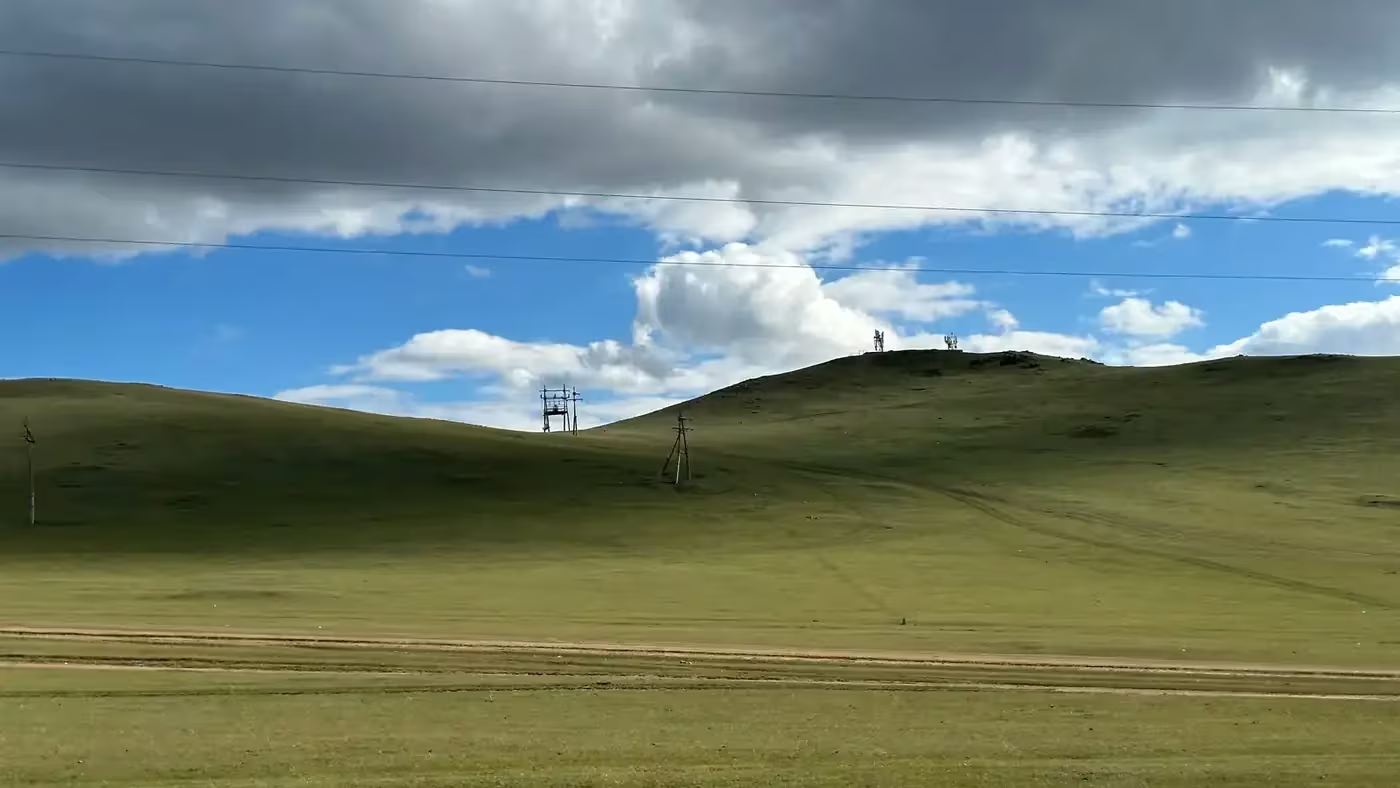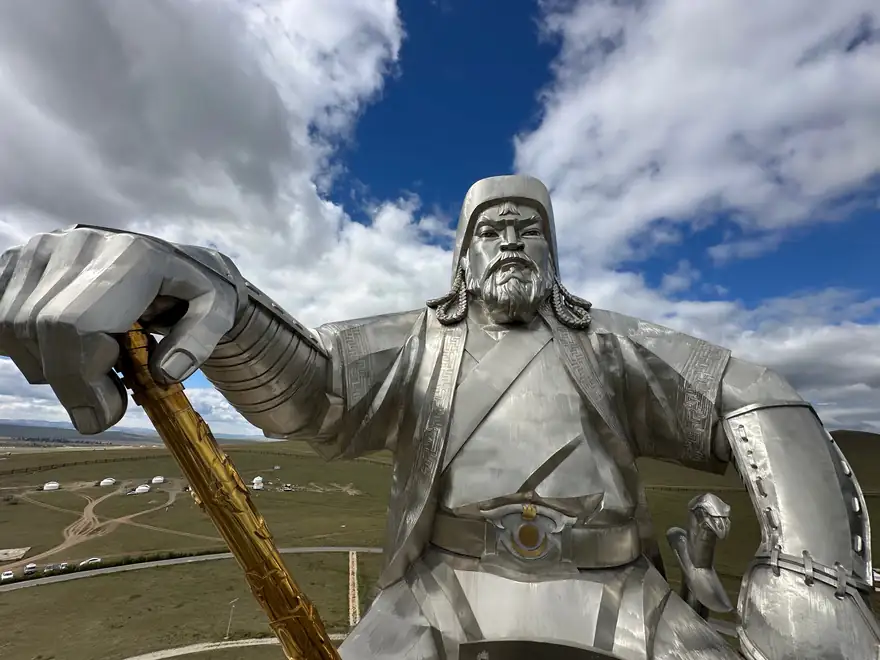
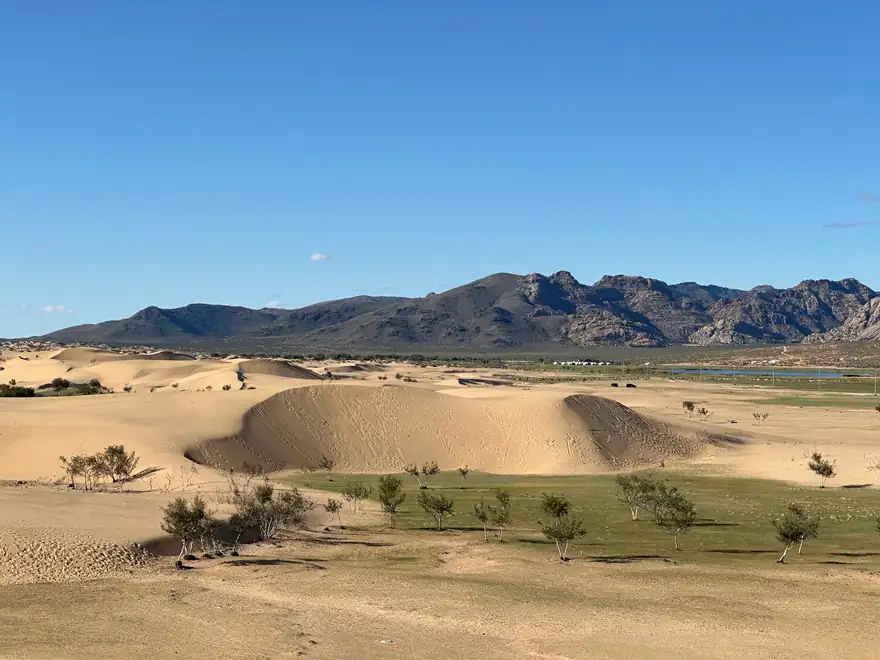
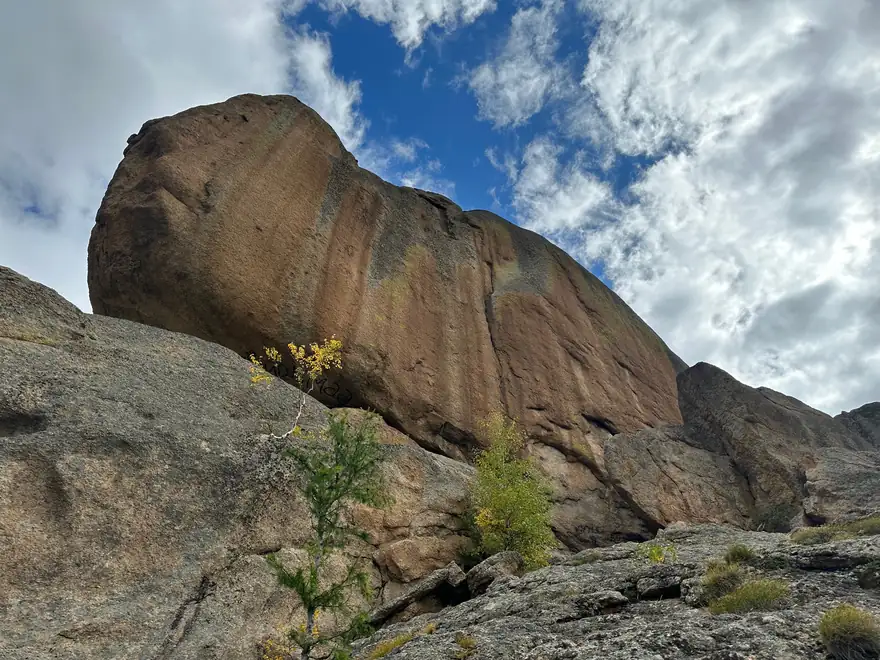
Most of the country has no people in it. Most of the people who are in it are right here.
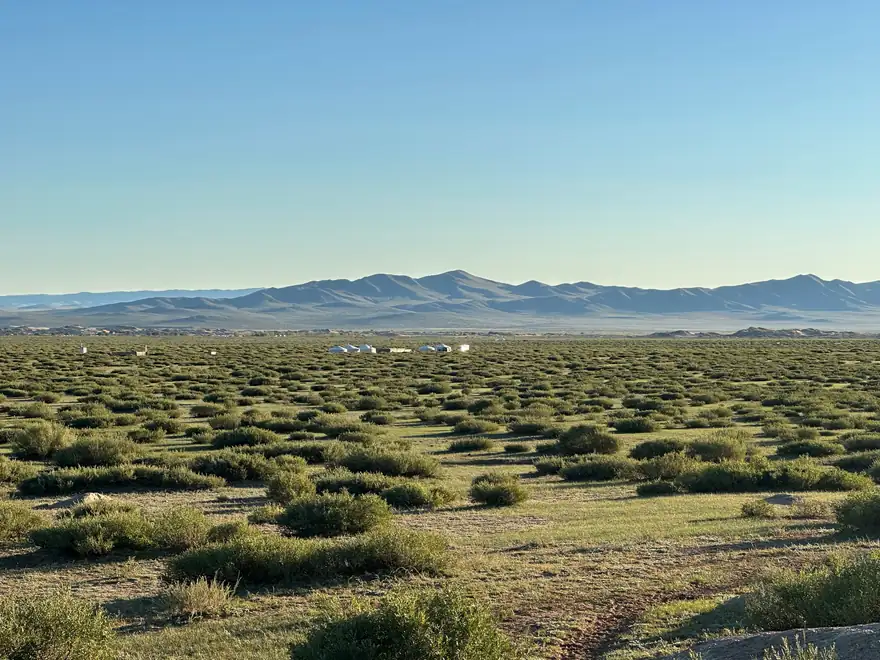
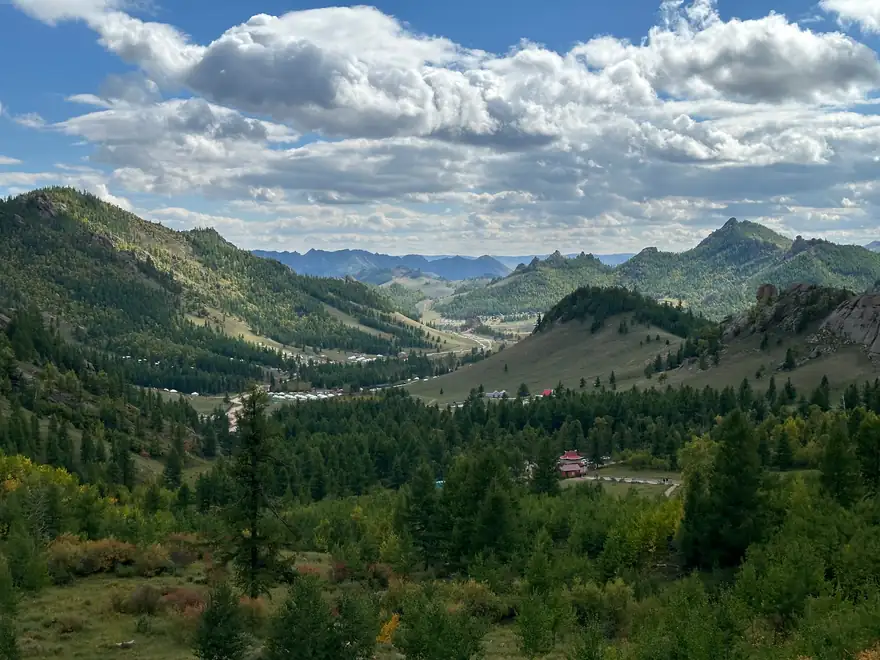
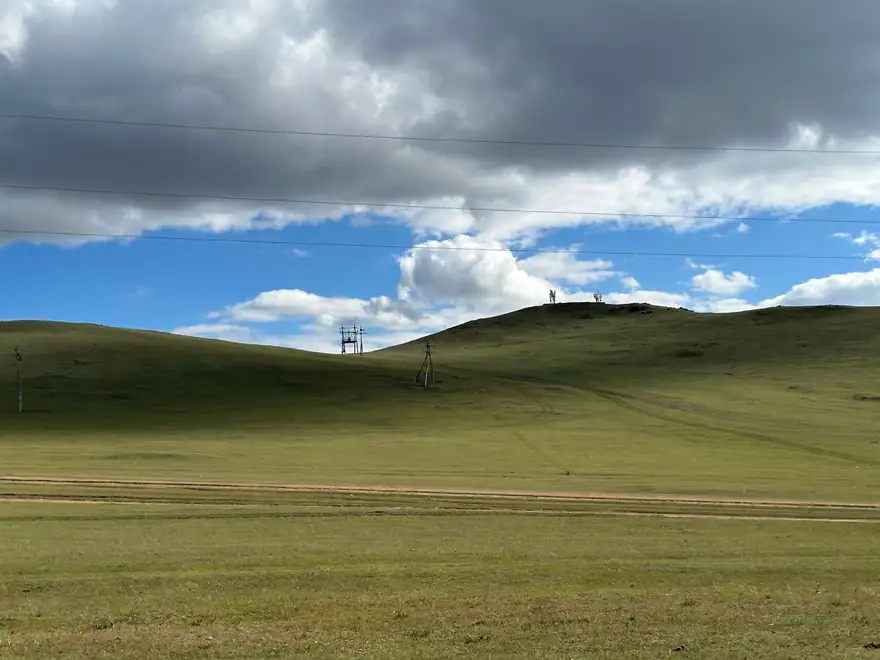
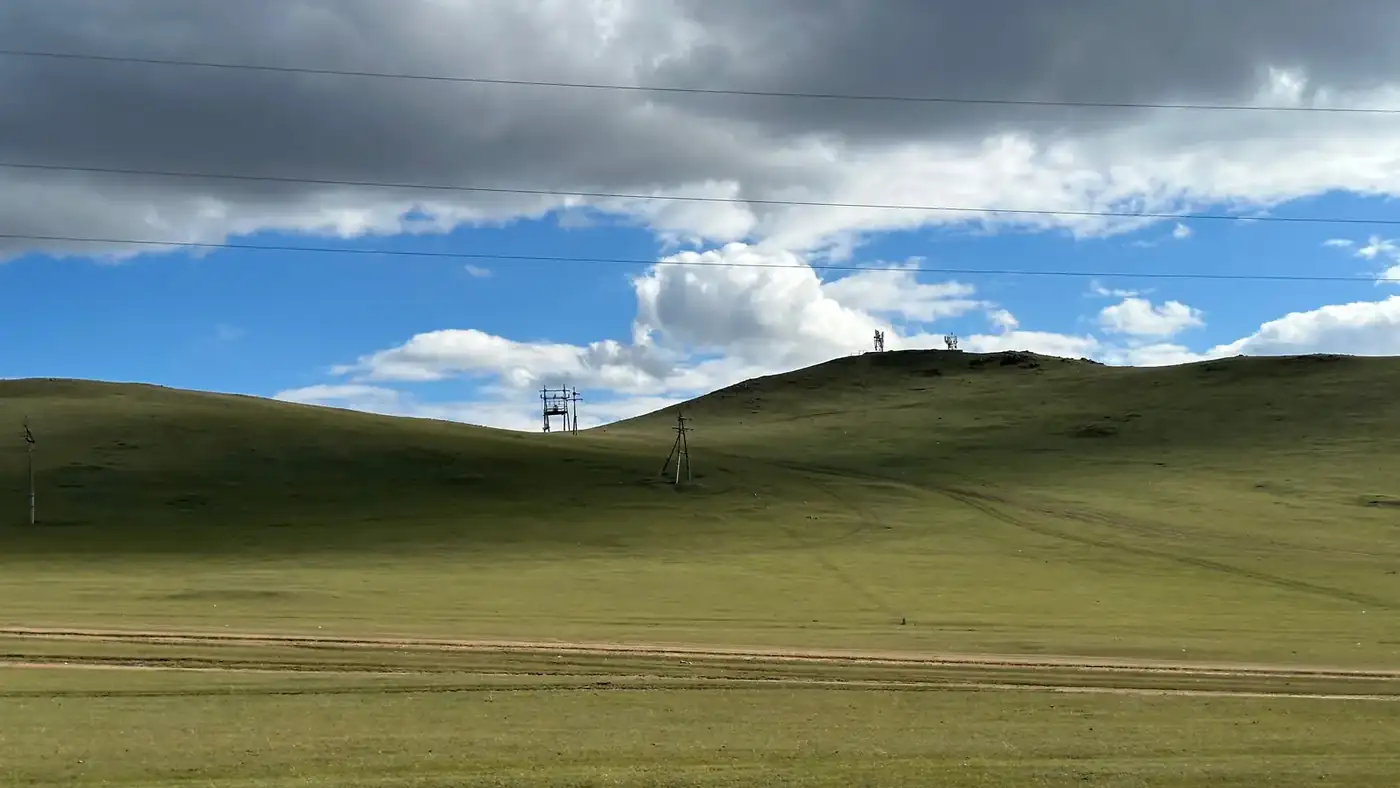
Mongolia is the most sparsely populated sovereign country on earth: three and a half million people across an area the size of Western Europe. Outside the capital, in any direction, the land is mostly empty — no fences, no fields, very few roads, and a horizon that sits where the planet stops being curved enough to stay flat. About half the population now lives in Ulaanbaatar. The other half is still out on the steppe, with the horses and the goats and the same wind that has been crossing the country for three thousand years.
The trip, here, is the country. You leave UB on a single road that within fifteen minutes becomes the only road, and then there is no road at all — a driver navigates a continuous beige plain by an act of pure orientation, with nothing visible to steer by, and arrives at a single white ger as if reaching a usual booth at a usual restaurant. This is operator-essential travel in the truest sense: distance, language, weather and the absence of infrastructure make a good local fixer not a luxury but the whole mechanism of the trip.
And it is a country visibly in motion. It is switching its writing system back to the vertical Mongol bichig its grandparents abandoned under Soviet alignment — the script is reappearing on shopfronts and departure boards faster than most people can read it. A mining boom no one will quite describe is reshaping the economy. A warming climate is moving herders cityward a hard winter at a time. The cashmere is going up in price; the horse, against the run of things, is still the horse.
Whatever rule you read about Mongolia ten years ago is probably wrong now, and whatever is true today will be different again in twenty years. The particular configuration the country is in right now — the script just emerging, the boom only partly cashed in, the steppe still mostly left alone, three and a half million people across a Western Europe of distance with almost none of them in the way — is something it will not be for many more. The right time to go is now.

Central Steppe
Mongolia · Central Steppe
The Ger, the Horse, the Closed Loop
The central steppe is where Mongolia is most itself: an unfenced, unstructured plain where the horizon sits at the actual horizon — the point where the planet stops being curved enough to stay flat. You stay with a working herder family in a real ger, not the tourist-camp version. Six adults to a room, four wooden beds against the felt wall, a cast-iron stove fed with dried dung through the night.
The horse here is what the car is to America. You ride one to check the herd; you wear the wool of the goat beside it; you burn the leavings of a third. The whole camp runs on a closed loop — the dung that heats the air at midnight is heating the milk-tea by morning. The small, barrel-chested Mongolian horses are even-tempered enough to carry travellers who have never ridden.
Evenings, if the night is right, are bonfires of sheep dung, a horsehair fiddle, and a throat-singer producing the sound of one person being two instruments. Most of the country looks like this and has nobody on it. A good fixer is the difference between a ger camp with a gift shop and a family who knows where everyone's feet are with the light off.
Ulaanbaatar
Mongolia · Ulaanbaatar
Half a Country in One City
Ulaanbaatar — everyone calls it UB — sits at 1,300 metres in a wind that comes off Siberia and has yet to encounter anything that asks it to slow down. It does not feel like a capital, and yet it now holds almost half the country's population. The other half is still out on the steppe, watching the same wind.
It is a city of quiet contradictions. A twenty-three-year-old in a six-hundred-dollar cashmere coat speaks Korean to her phone, Russian to her grandmother, Mongolian to the waiter and English to you — and goes home to a ger three hundred kilometres away every July for Naadam. Around Sukhbaatar Square the traditional vertical script is reappearing on shopfronts, a writing system the country is, very gradually, learning to read again.
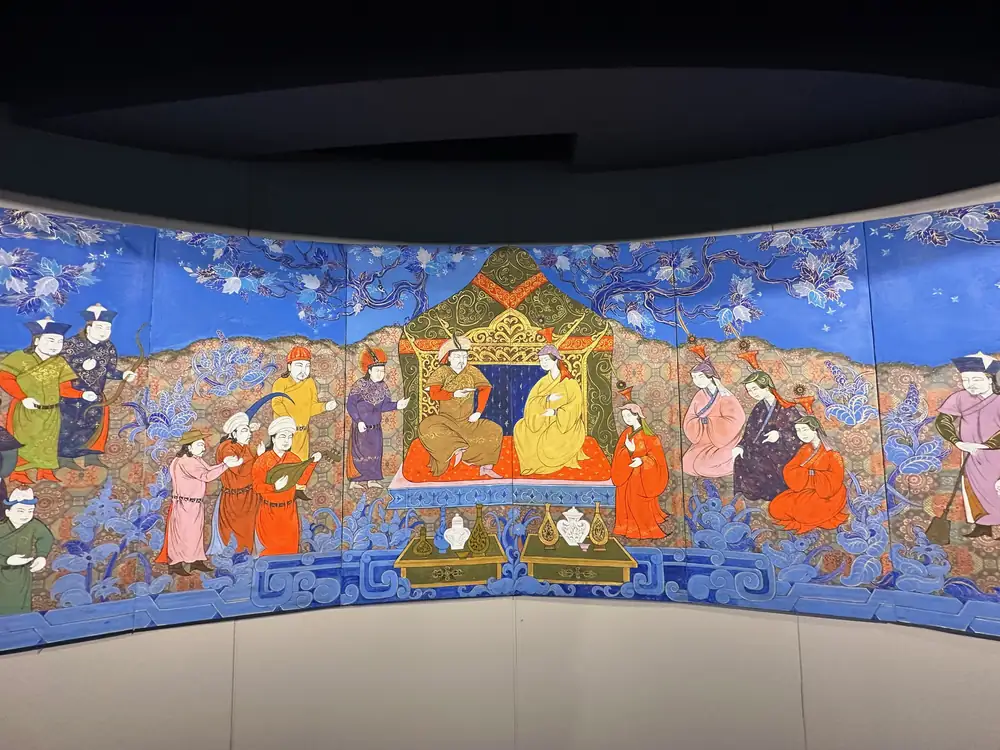
Most travellers treat UB as a place to warm up and wind down on either side of the steppe — a night or two, the Gobi Cashmere flagship, a monastery, the National Museum, and out. That is the right way to use it. The country is not in the city; the city is the door.
The Gobi
Mongolia · The Gobi
Four Landscapes in One Desert
The drive south is a drive into a different country pretending to be the same one. The grass thins, the land lowers, the colour drains, and then the sand begins. The Gobi is not the desert a film shows you — most of it is gravel plain, interrupted by mountains that come out of nowhere, by streams that crisscross the gravel and vanish into it. The dunes are concentrated in pockets: the Khongoryn Els, the flaming cliffs of Bayanzag where the first dinosaur eggs were found.
You ride a Bactrian camel — two-humped, calm to a degree the films do not prepare you for — led by a herder whose stove burns camel dung rather than horse, because the fuel changes with the terrain. From the crest of a forty-metre dune the panorama is geologically improbable: a snow-tipped range to the north, a sea of dunes to the south, a green plain between them threaded with streams like cracks in old porcelain.
Mountain, dune, plain and stream, all meeting at the point you happen to be standing on. Mongolia is not one country in the way most countries are one country. It is at least four, stacked on each other, and the Gobi is where you see the seams.
Khövsgöl & the North
Mongolia · Khövsgöl & the North
The Blue Pearl and the Reindeer People
North of the steppe the country changes again. Lake Khövsgöl — the Blue Pearl — holds nearly two percent of the world's fresh water in a 130-kilometre trench of taiga forest that looks nothing like the open south. Larch, not grass; mountains, not plain; a cold clear lake you can drink from straight.
Beyond the lake, in the Darkhad valley, live the Tsaatan — the Dukha — one of the last reindeer-herding cultures on earth. A few hundred people who move with their herds through the high taiga, reachable only on horseback over passes with a guide who knows the family that is hosting that season. This is operator-essential travel in its purest form: there is no road, no sign, no booking page.
Winter turns the lake to a metre of ice and an ice festival; summer opens the trails to the reindeer camps. Either way, the north is the antidote to anyone who thinks Mongolia is only the steppe and the Gobi.
Bayan-Ölgii & the Altai
Mongolia · Bayan-Ölgii & the Altai
The Eagle Hunters of the West
The far west is not Mongol but Kazakh — a different language, a different faith, a different face. Bayan-Ölgii is the most remote province in the country, pressed up against the glaciers of the Altai Tavan Bogd where Mongolia, Russia and China meet, and it keeps a tradition found almost nowhere else: hunting from horseback with a trained golden eagle.
The berkutchi take eaglets from the cliffs, train them over years, hunt fox and hare with them across the winter snow, and release them back to the wild after a decade of partnership. The Golden Eagle Festival each October is the showpiece, but the real thing is a stay in a Kazakh ger with a hunting family, watching a bird that weighs less than a paperback decide whether to humour you.
It is the hardest region of Mongolia to reach and, for many travellers, the one that lingers longest. The Altai is high, glaciated and genuinely wild; the trekking is serious; the welcome, in the Kazakh manner, is overwhelming.
Khangai & Orkhon
Mongolia · Khangai & Orkhon
Karakorum and the Old Capital
West of UB the green Khangai mountains hold Mongolia's deep history layer. The Orkhon Valley, a UNESCO site, was the cradle of steppe empires for two thousand years — and Kharkhorin, the modern town, sits on the ruins of Karakorum, the imperial capital Chinggis Khan's heirs built and Kublai later abandoned for Beijing.
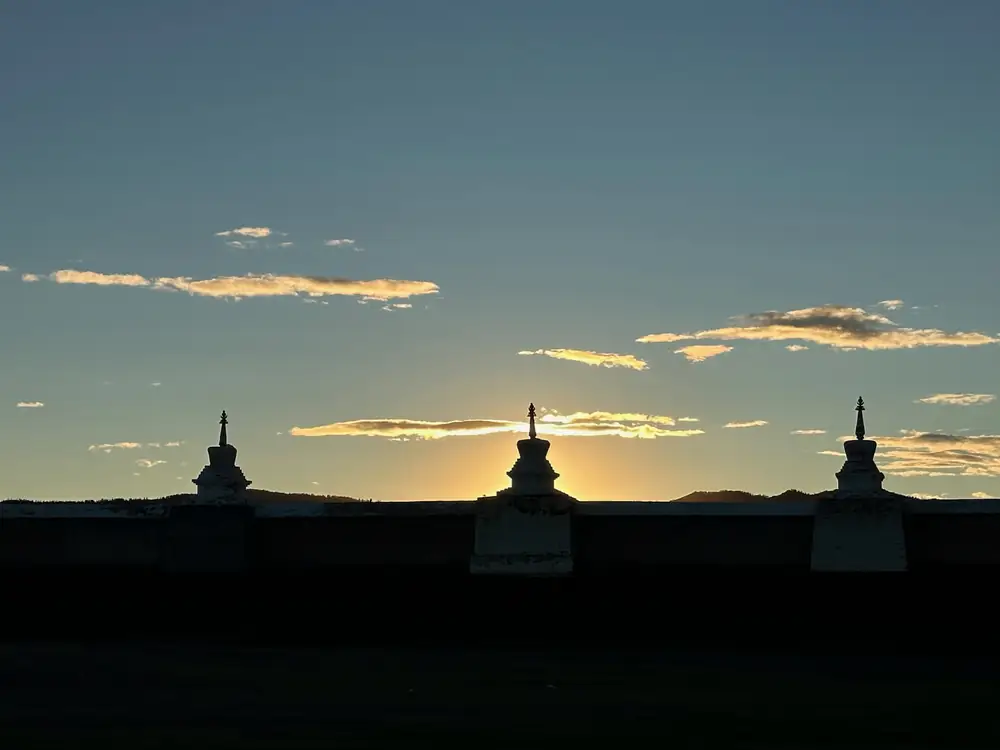
Erdene Zuu, the country's oldest surviving monastery, was raised from Karakorum's stones in the sixteenth century; its surviving stupas ring a courtyard that once held a hundred temples before the Soviet purges. Nearby, the Orkhon waterfall drops through a basalt gorge, and the Tsenkher hot springs steam in the hills — a soak after days on the road.
This is the region for travellers who want the layers under the landscape: the empire, the monasteries, the long argument between the steppe and the powers that kept trying to settle it.