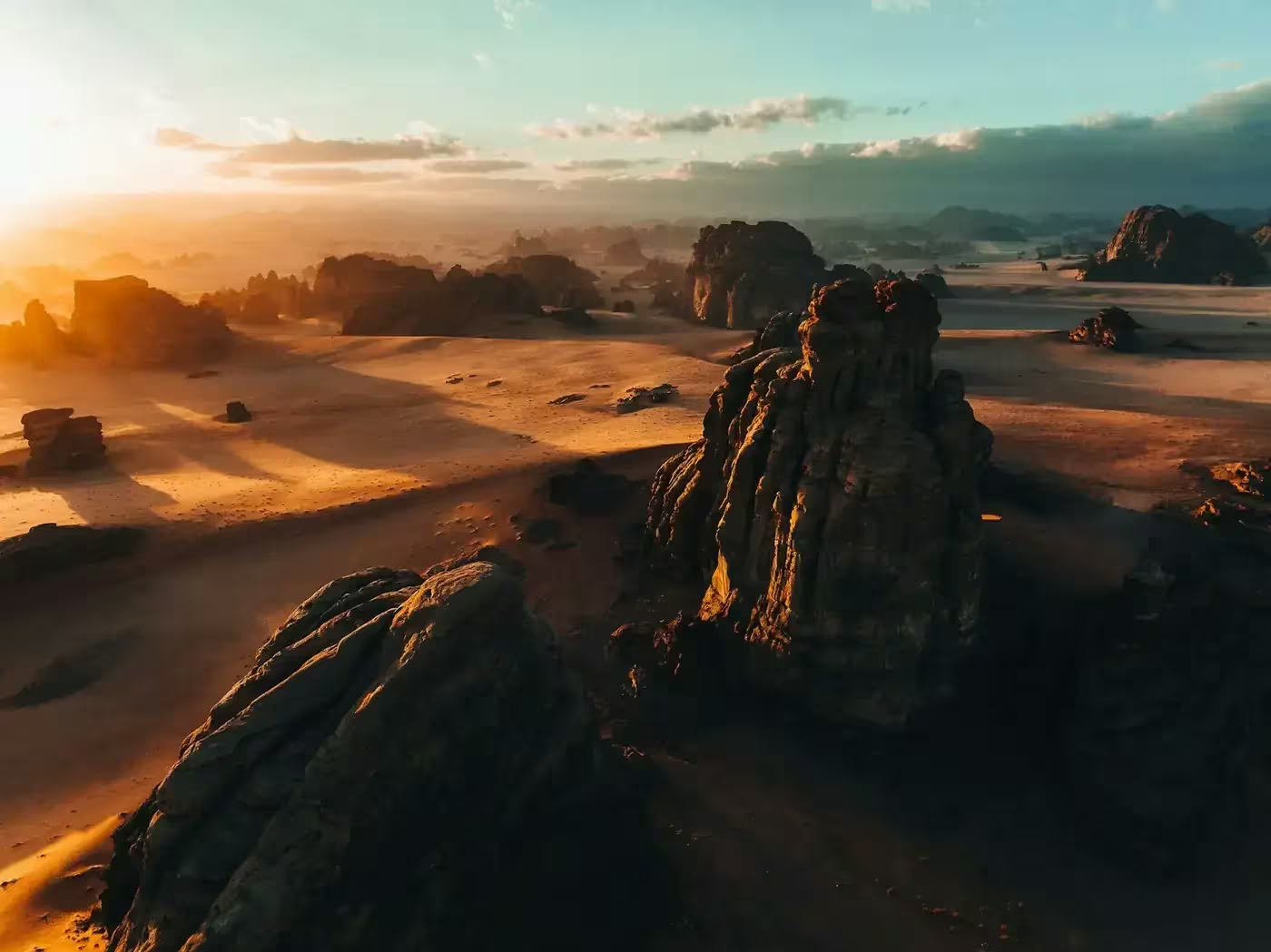
Saudi Arabia opened its gates in 2019. The world hasn’t arrived yet.
Saudi Arabia opened its doors to international tourism in 2019. In the years since, the country has poured investment into a handful of flagship developments — NEOM, the Red Sea Project, Diriyah. These are real, and they will eventually transform the country’s tourism economy entirely.
But they haven’t arrived yet. And that gap — between opening and saturation — is precisely the window that matters. Right now, the Farasan Islands receive almost no visitors and their Roman-era ruins sit unmarked on empty beaches. The Asir highlands, green and misty above 2,000 metres, are almost entirely unknown outside the Kingdom. The lava fields stretching out from Khaybar have been walked by pilgrims for a thousand years and photographed by almost nobody.
The guides working in these places today are pioneers. They know the land the way outsiders cannot yet. They earn fairly when travellers choose them directly. And the communities whose landscapes these are — the fishing families on the Red Sea islands, the farmers on the Asir terraces — benefit in ways that a government resort cannot replicate.
In five years, some of these experiences will be on every travel itinerary and priced accordingly. Now is the time.
AlUla & Khaybar · Al Madinah region · Northwest Saudi Arabia
Al Madinah Region · AlUla & Khaybar
Black Lava Fields & Nabataean Tombs
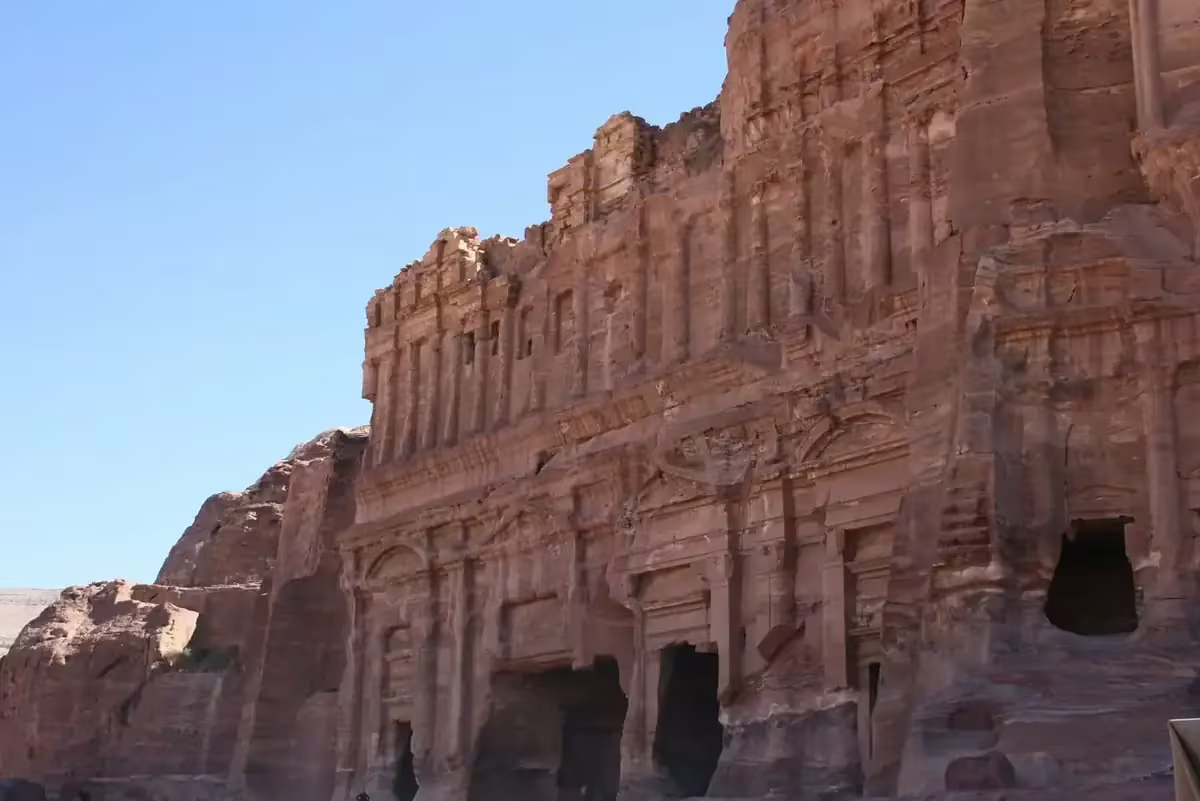
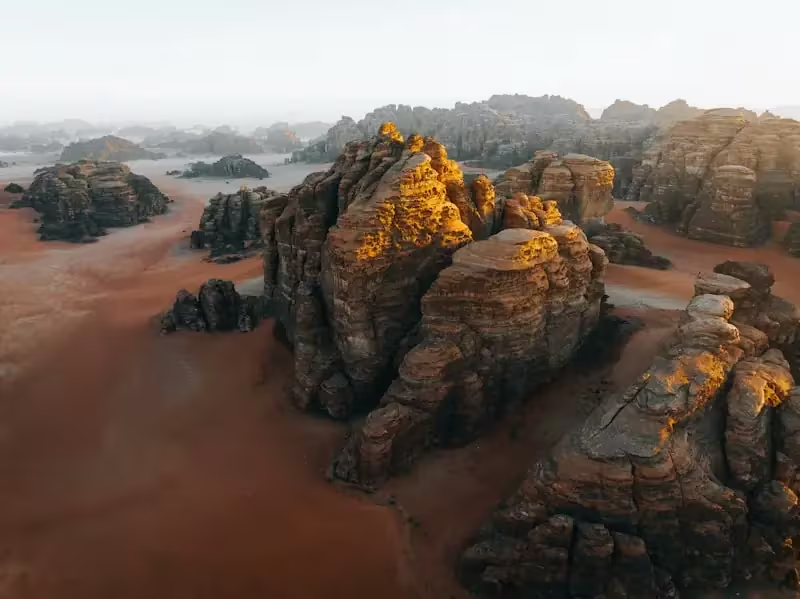
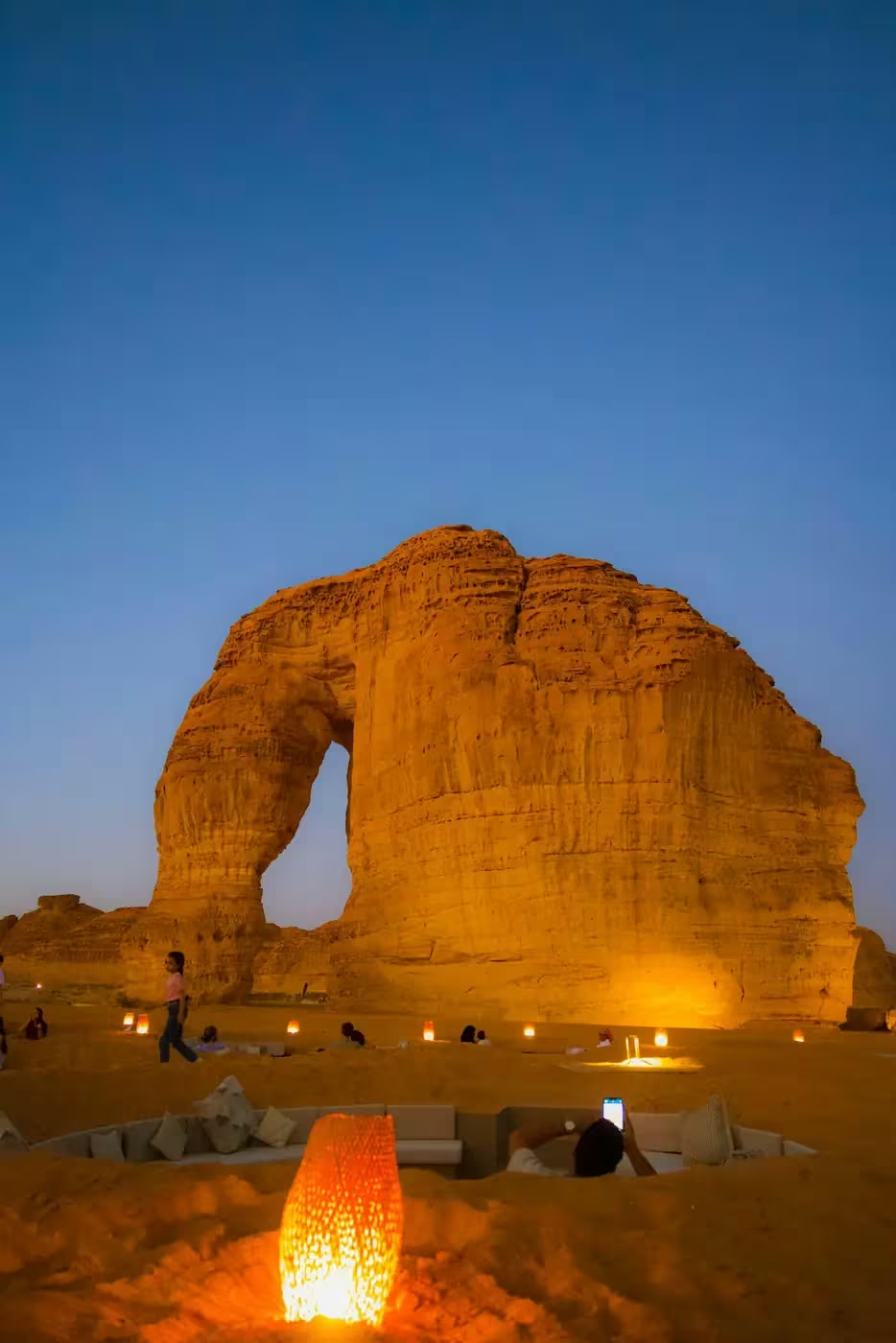
AlUla is extraordinary — sandstone canyons, Nabataean tombs carved from rose-red cliffs, the kind of landscape that stops you in the middle of a sentence. The Saudi government has invested heavily in its development, and parts of it are now polished and beautifully presented.
But two hours north, something less visited begins. The Khaybar lava fields — called harrat in Arabic — stretch for hundreds of kilometres across the northwest. Ancient volcanic craters, black basalt plains, oases that appear improbably green against the rock. The Nabataean route from AlUla ran through here. So did the caravans that carried frankincense to the Mediterranean.
The guides who know Khaybar well are from the families who have always lived in it. Some are historians by training. Some are simply men who grew up walking these fields as boys. The experience of going with them — into a landscape with no tourist infrastructure, no fences, no signs — is as close as you’ll come to understanding what Arabia looked like before the modern world arrived.
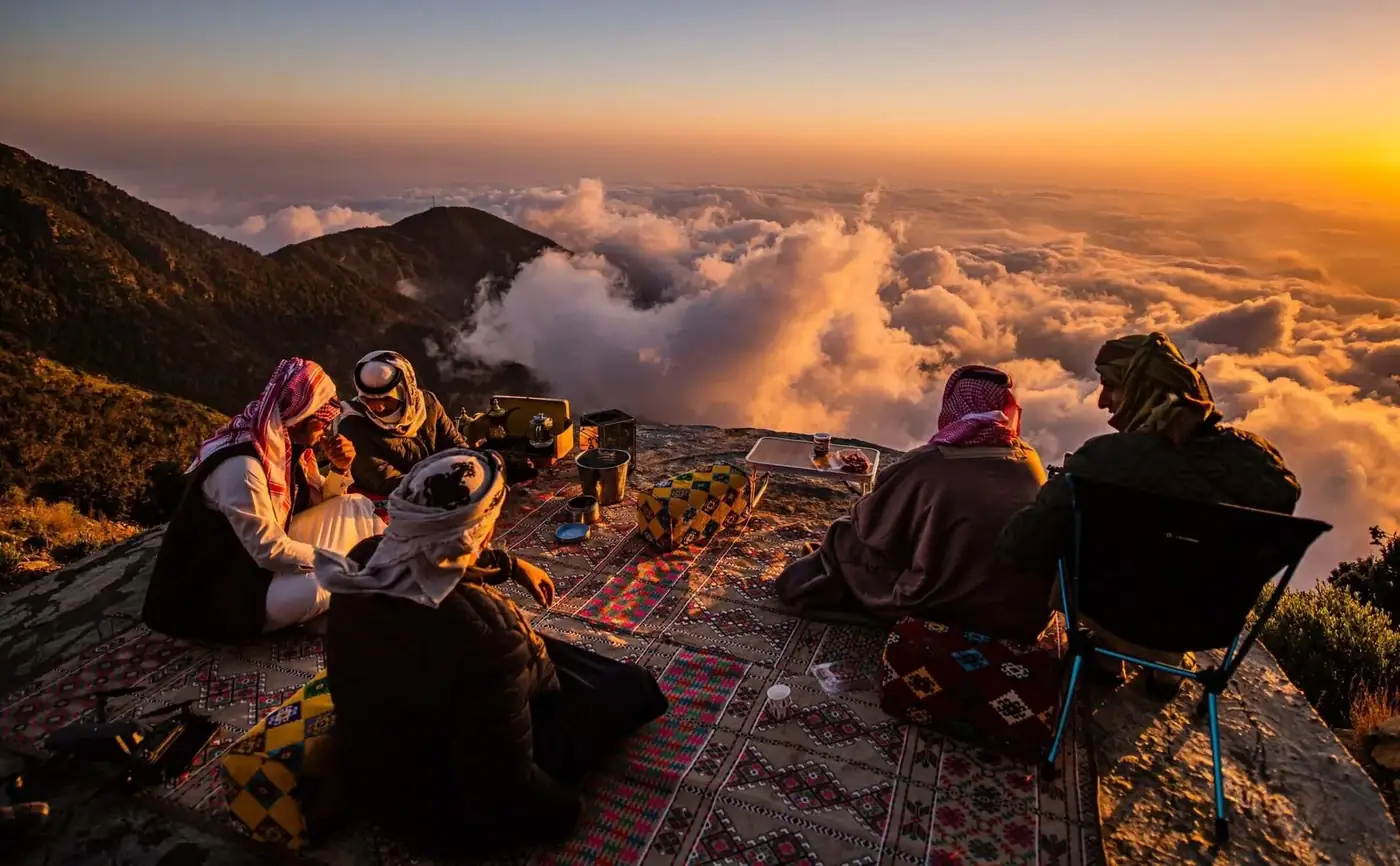
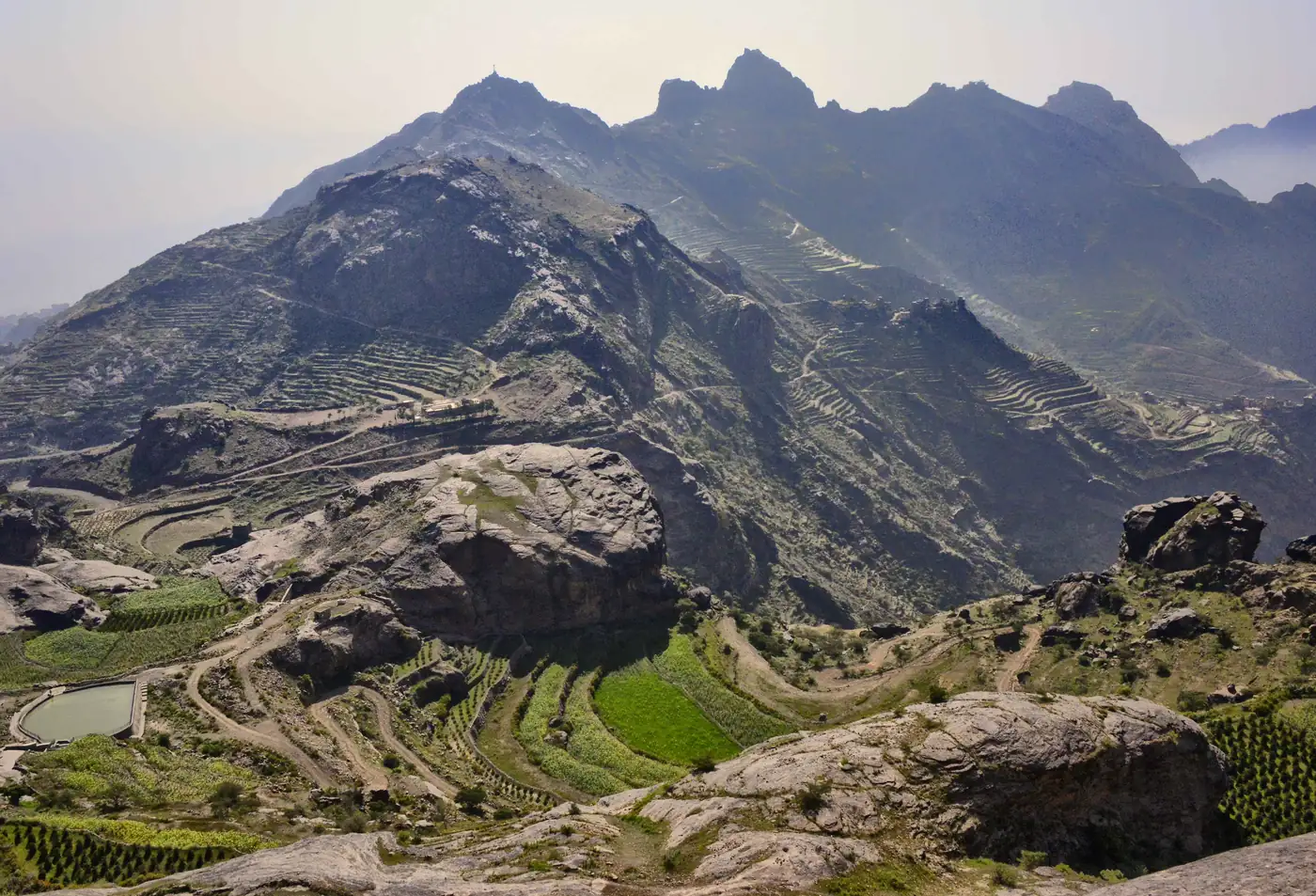
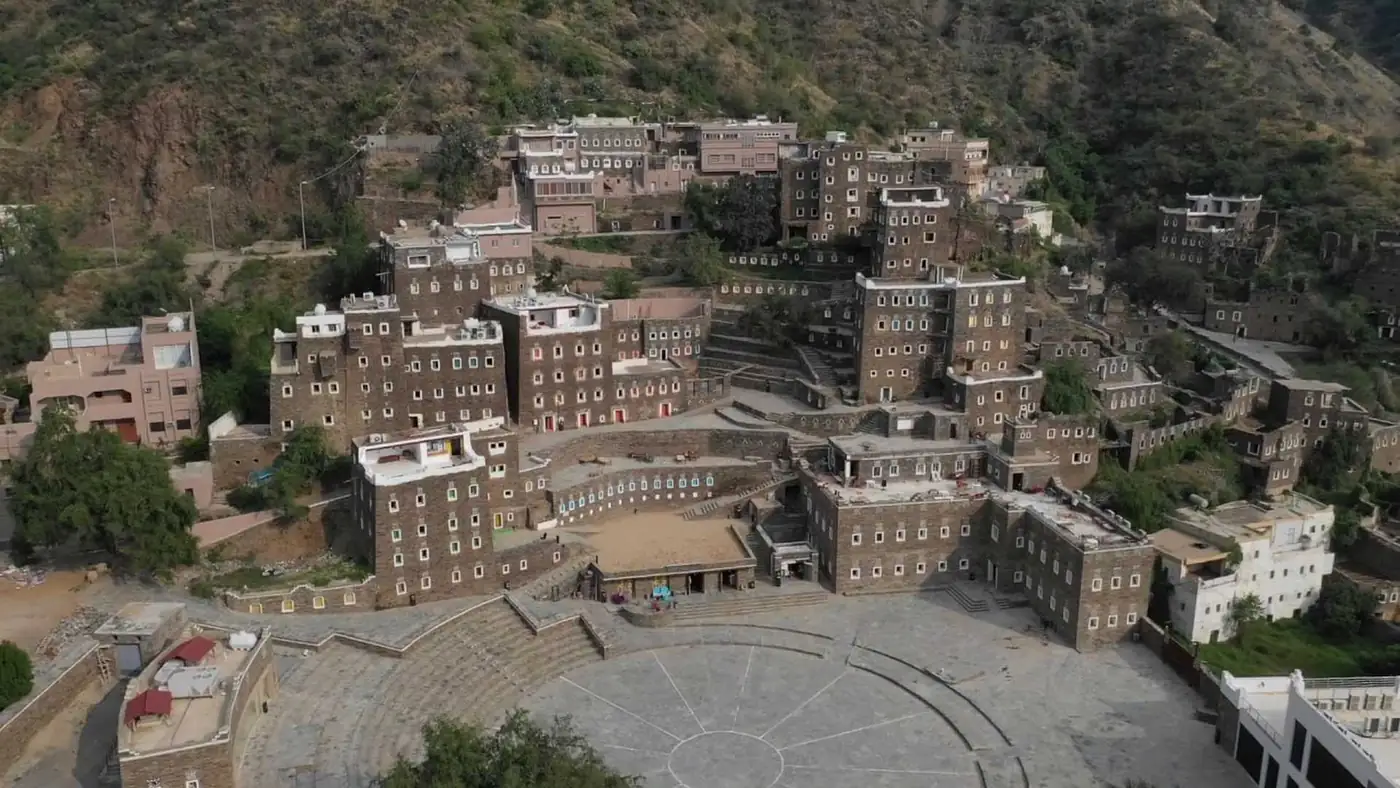
Asir Region · SW Saudi Arabia · ~2,200m elevation
Southwest Saudi Arabia · Asir
Coffee Terraces Above the Clouds
Most people don’t know Saudi Arabia is green. In the southwest, the Asir highlands rise above 3,000 metres, catching monsoon moisture from the Indian Ocean. The result is a landscape of terraced farms, juniper forests, and mudbrick villages clinging to cliff faces — utterly unlike the Arabian Peninsula most travellers imagine.
Coffee was grown in these mountains long before Yemen claimed the origin story. The old terraces are still there. So are the villages, with their distinctive painted facades and communal architecture. In the markets of Abha and Al Baha, you can buy qahwa — Arabian coffee brewed with cardamom — from farmers who grew the beans in view of where you’re sitting.
Asir receives domestic Saudi tourists in summer, seeking the cool air. International visitors are rare. The guides who know this region well are almost universally local — Asiri men and women whose families have farmed and built here for centuries.
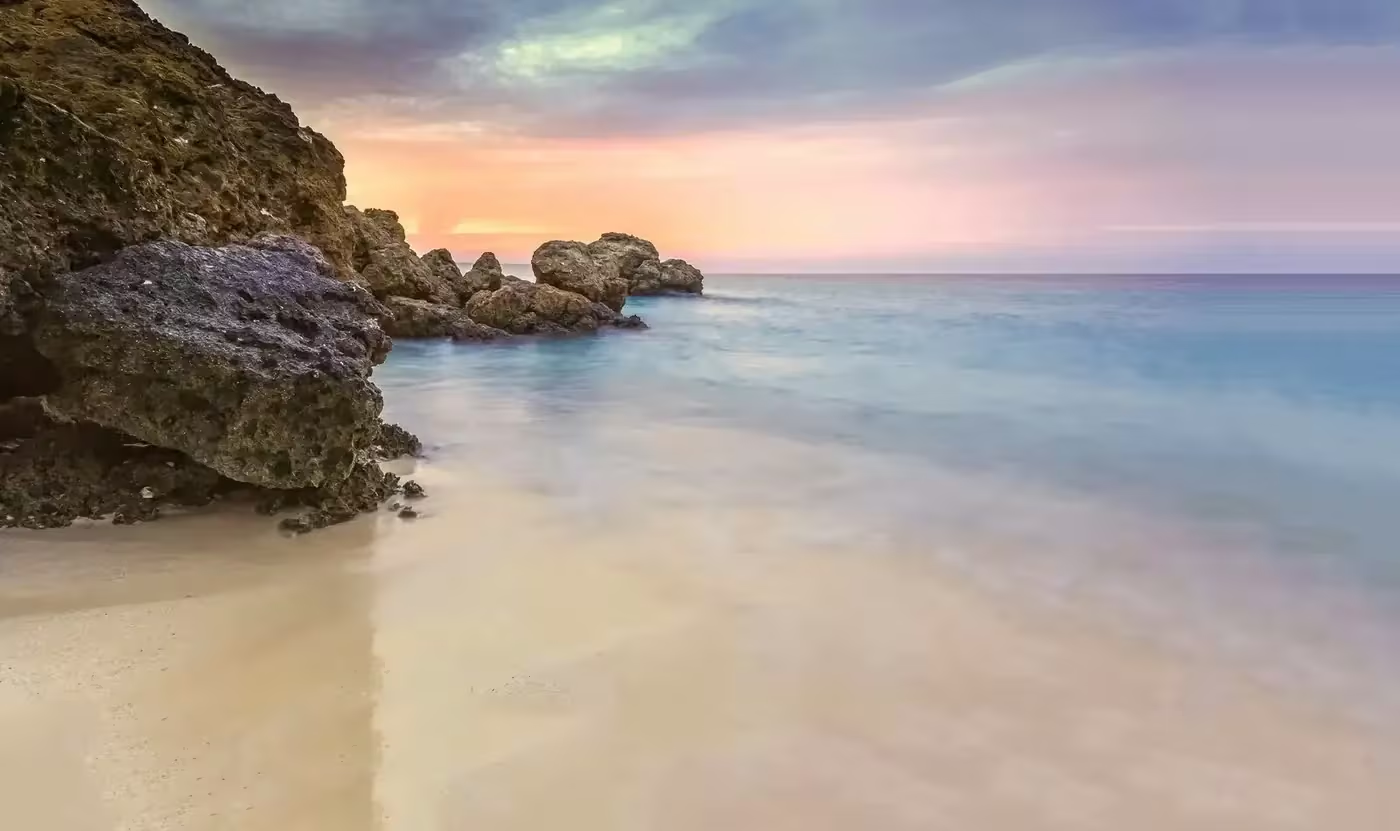
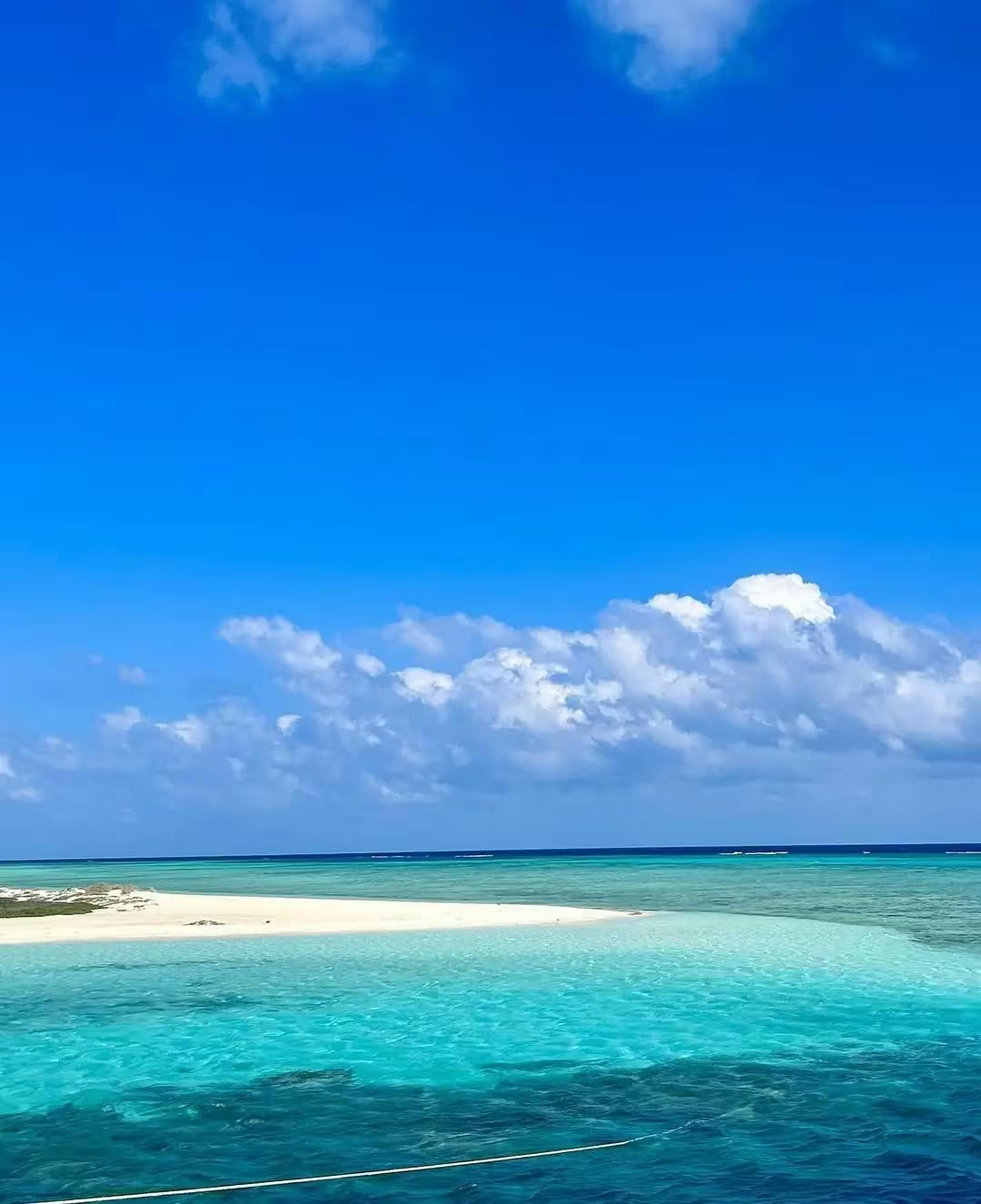
Farasan Islands · Red Sea · Southern Saudi Arabia
Red Sea · Farasan Islands
The Archipelago No One Has Found
The Farasan Islands sit 50 kilometres off the coast of Jizan in the southern Red Sea — a protected archipelago of coral-ringed islands, ancient ruins, and waters that have barely been snorkelled. There are no chain hotels here. Visitor numbers remain negligible.
On the main island, a 2,000-year-old Roman garrison left behind columns and inscriptions that still stand in the open air, unenclosed, unguarded. The reef surrounding the archipelago is among the healthiest in the Red Sea, largely because so few people know it exists.
The local operators who run dhow trips here are from fishing families who have worked these waters for generations. This is not a tourism product built for visitors — it is a place that happens to be accessible, if you know who to ask.
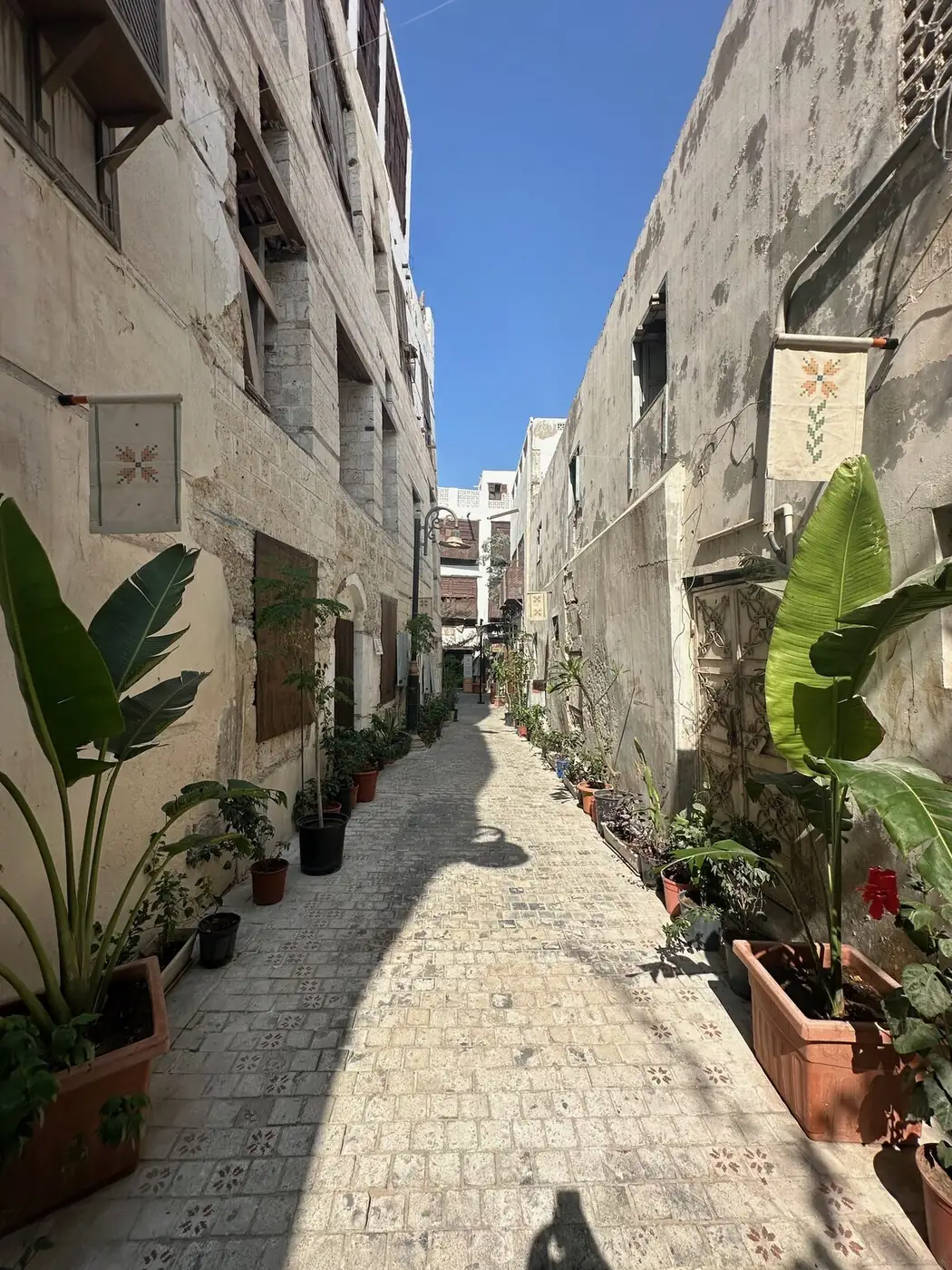
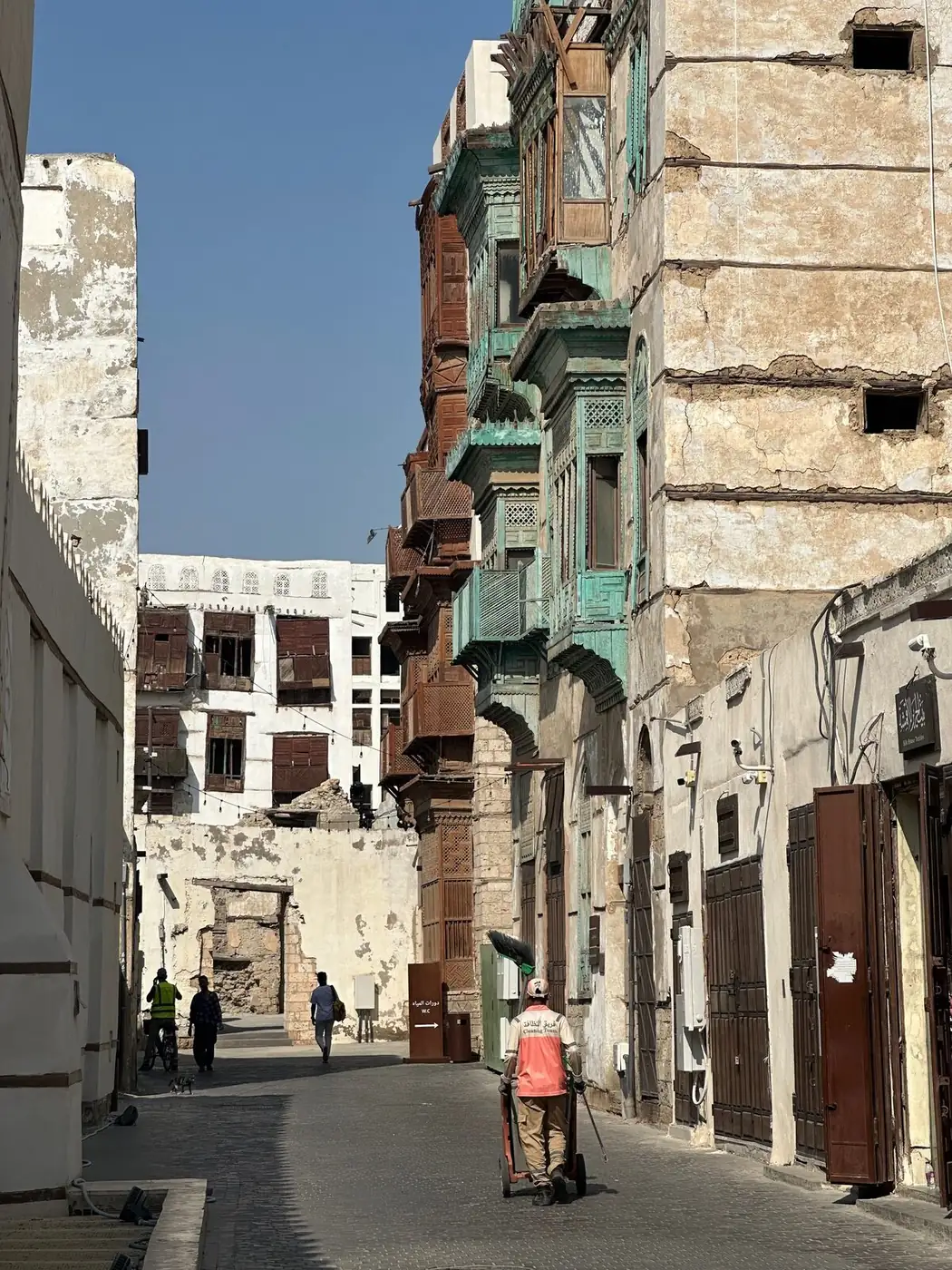
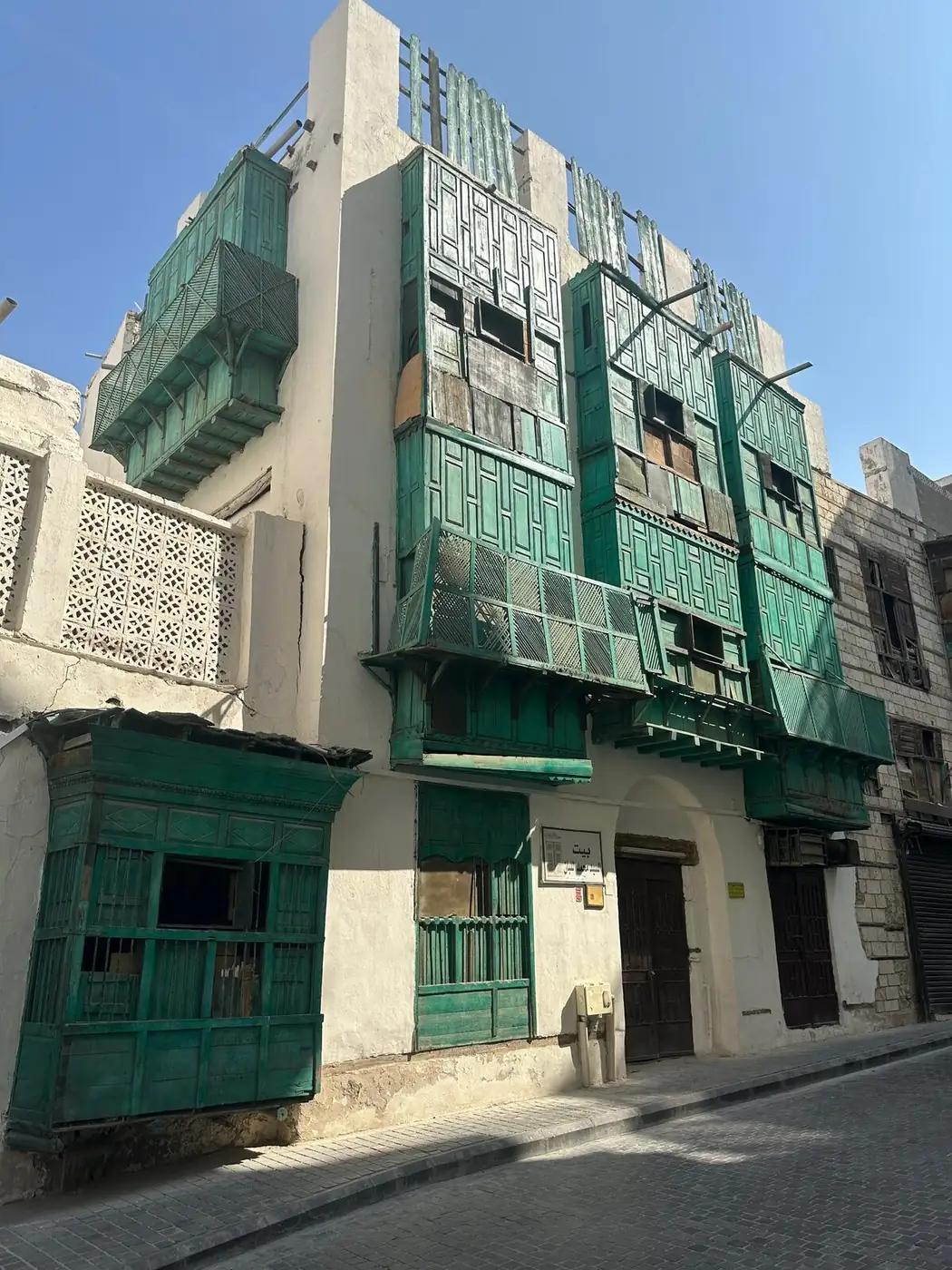

Jeddah · Al-Balad UNESCO World Heritage Site · Red Sea coast
Jeddah · Al-Balad & the Corniche
The Merchant City on the Red Sea
Jeddah was the entry point to the Arabian Peninsula for a thousand years — the port where pilgrims arrived for Mecca and merchants from India, East Africa, and the Ottoman Empire traded. The money collected into architecture. Al-Balad is a UNESCO site of coral-stone buildings stacked five and six storeys high, their facades covered in rawasheen — carved wooden lattice balconies that let air through and keep out the sun.
The rawasheen are the reason to come. No two buildings carry the same pattern. Some are painted faded turquoise or sienna, others stripped to bare wood. They were built by Ottoman, Indian, and East African craftsmen — each leaving their particular geometry on a city that absorbed every influence the sea brought in.
The city is more alive than its UNESCO designation suggests. Families still occupy the old houses. The street-food scene — mutabbaq, fuul, qishr — works from the same corners as before. In the evenings the corniche fills, the King Fahd Fountain fires 300 metres into the sky, and the city does what port cities have always done: it refuses to stay in the past.
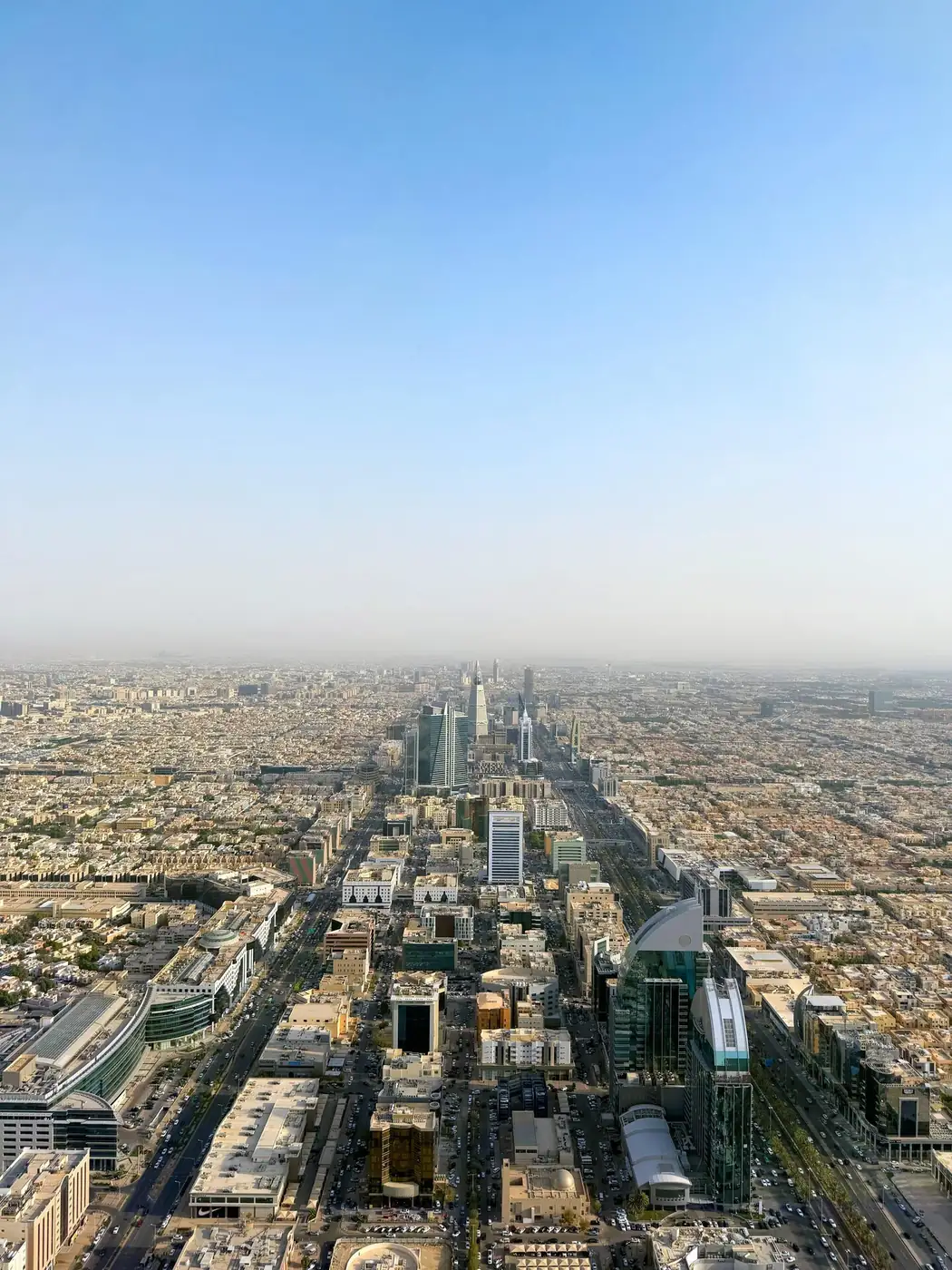
Riyadh · the capital on the plateau
Saudi Arabia · Riyadh & Najd Plateau
The Capital on the Plateau
Riyadh is the only Gulf capital not built on a coast — five million people on a desert plateau, surrounded by date-palm oases that pre-date the city. The northern edge is Diriyah, where the Saudi state began. Twenty minutes by car and you’re at the foot of glass towers in Olaya district, where everything is new and the lights stay on until two.
Ninety minutes outside the city, the Edge of the World — Jebel Fihrayn — drops 300 metres to a desert plain that runs to the horizon. Riyadhi families come on weekends to watch the sun set. Almost no foreign visitors find their way out. The pace of change in the city is the headline; the geology around it is the longer story.
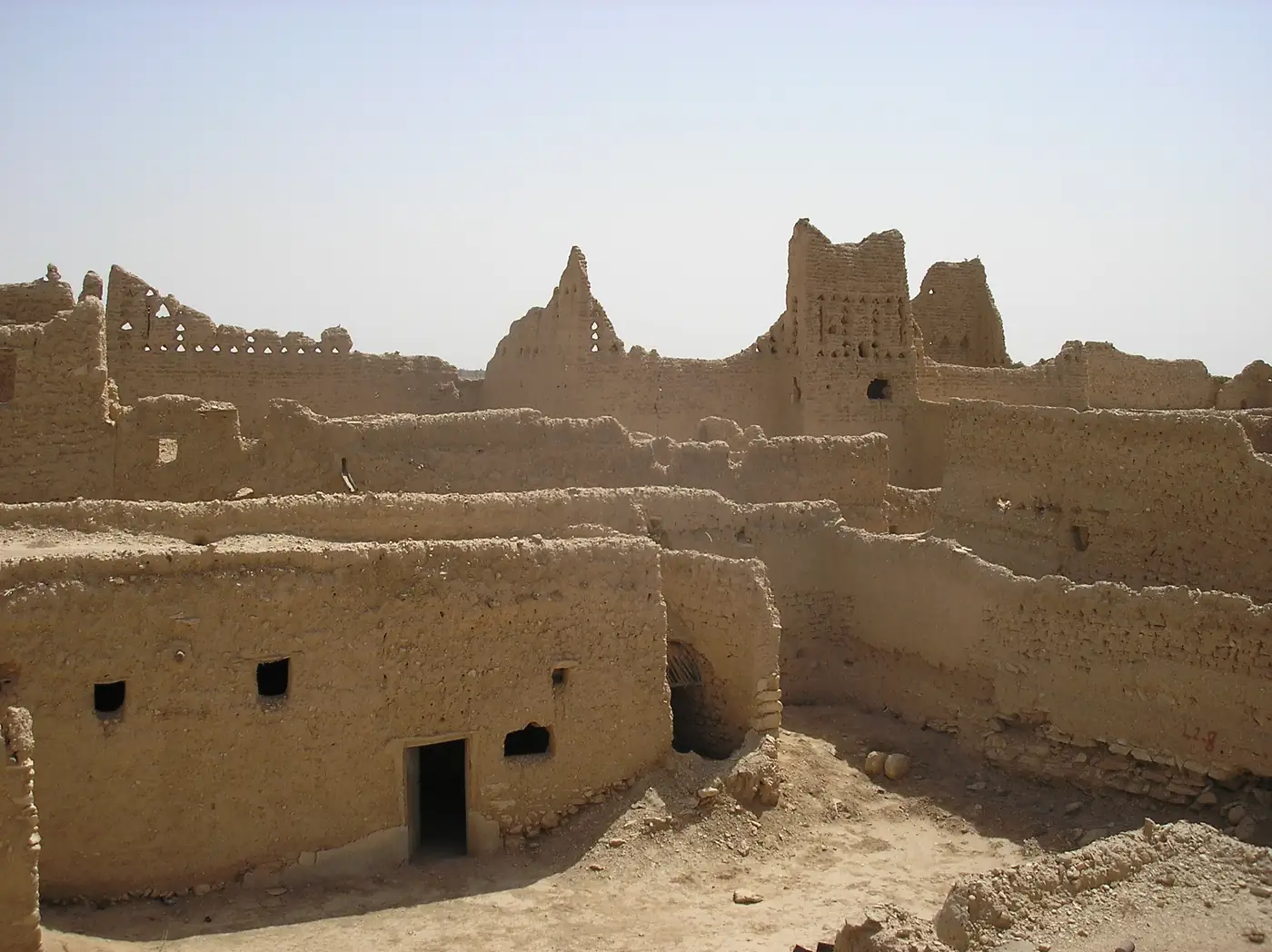
Diriyah · UNESCO heritage of mud-brick
Saudi Arabia · Diriyah & At-Turaif
Where the Saudi State Began
Diriyah is the original capital — a mud-brick city on the banks of the Wadi Hanifa, where the al-Saud dynasty took root in 1727. The At-Turaif district, a UNESCO World Heritage Site, is being restored room by room, courtyard by courtyard. The mud is the same mud used here for three centuries; the techniques are taught by people whose grandfathers built the original walls.
By 2030, Diriyah will be a fully programmed cultural district with hotels, museums, restaurants, and a national theatre. Right now, in the in-between, you can walk the half-restored alleys at dusk and have most of them to yourself. It is one of the rarer travel experiences: a place mid-becoming.
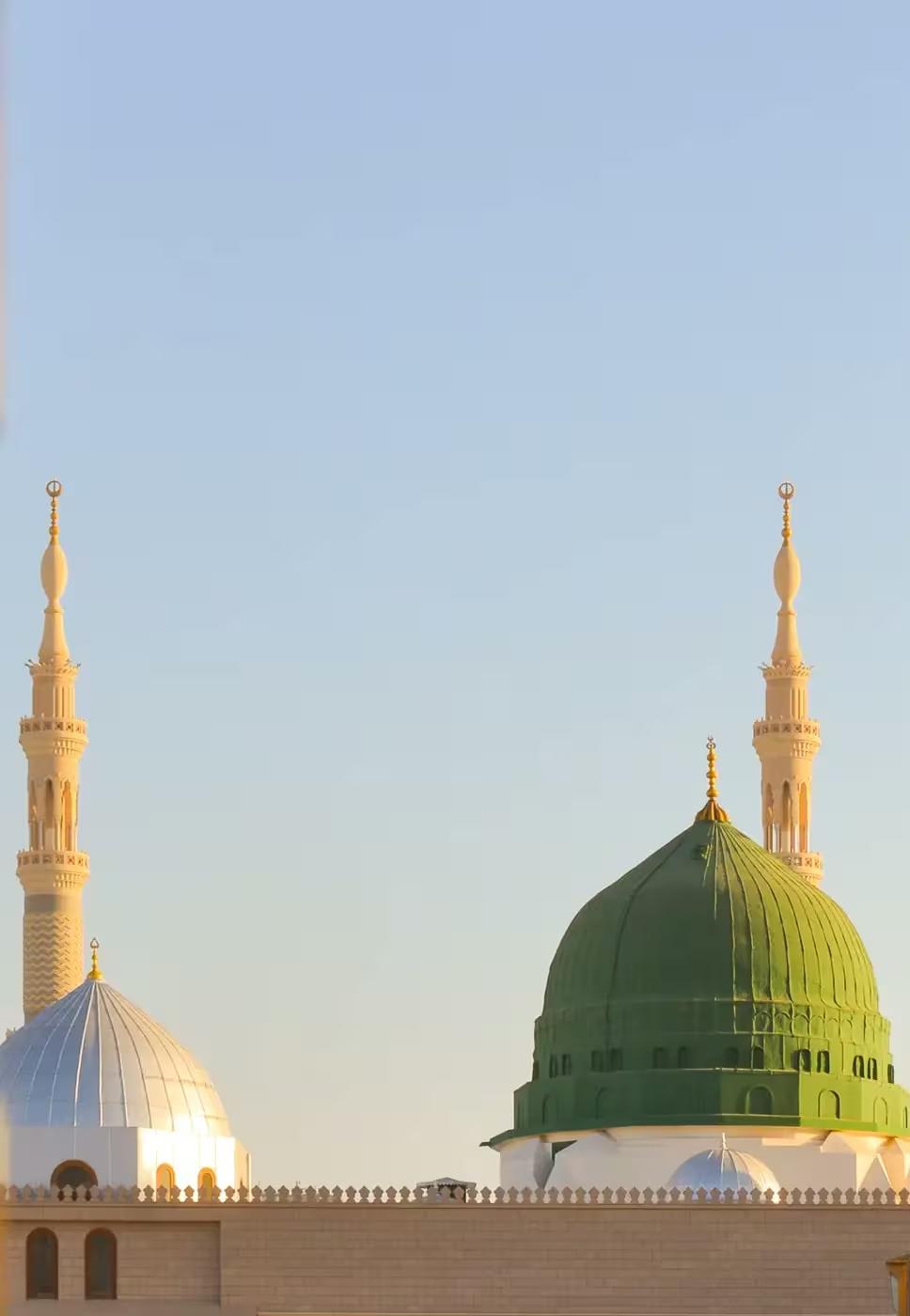
Madinah · the Hejaz region
Saudi Arabia · Madinah & Hejaz
The Second Holy City
Madinah is one of the two holiest cities in Islam — the Prophet Muhammad’s burial place, the destination after Mecca on every Hajj pilgrimage. The Prophet’s Mosque, with its green dome, sits at the centre of a city of palm groves and basalt plains. Most of central Madinah is open only to Muslim visitors, but the surrounding region — the lava fields of Khaybar, the abandoned Ottoman railway stations of the Hejaz line, the date farms north of the city — is open to all.
The Hejaz Railway, built by the Ottomans in the early 1900s and famously sabotaged by T.E. Lawrence’s bedouin raiders, runs in fragments through the desert north of Madinah. You can stand on a platform at one of the abandoned stations — the steel still rusting on the tracks — and feel the entire chronology of the place collapse into one quiet afternoon.
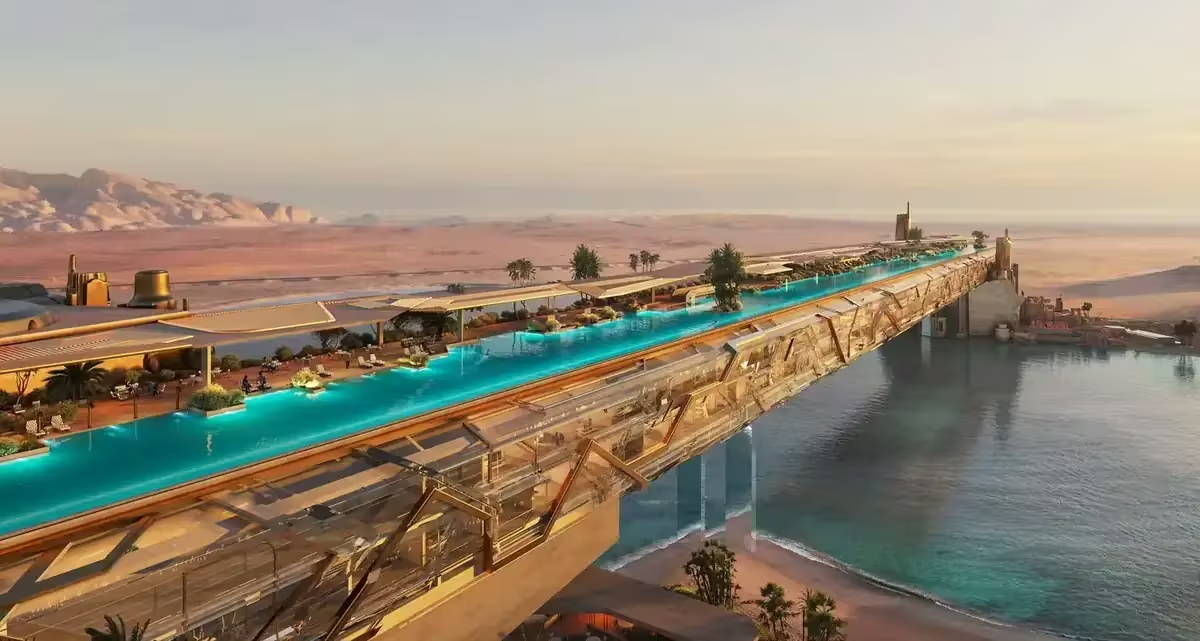
NEOM · the future under construction
Saudi Arabia · NEOM & Tabuk
The Future, Under Construction
NEOM is the megaproject Saudi Arabia is building on the Red Sea coast — 26,500 square kilometres of planned cities, including The Line, a future linear city 170 kilometres long. Today, most of NEOM is a construction site. The Sindalah luxury island opened in 2024; everything else is years out. What is already worth visiting is the surrounding Tabuk region: Hisma sandstone formations, the Maqna oasis, and dive sites along a coast where the coral hasn’t yet learned to fear divers.
The contradiction is the point. You can dive a reef in the morning that has never been mapped commercially, then drive an hour south and watch a construction crane lower a glass façade onto an island resort. The coast is changing while you’re there. The Hisma desert isn’t.
Eastern Province · Al-Ahsa oasis
Saudi Arabia · Eastern Province & Al-Ahsa
The Other Saudi Arabia
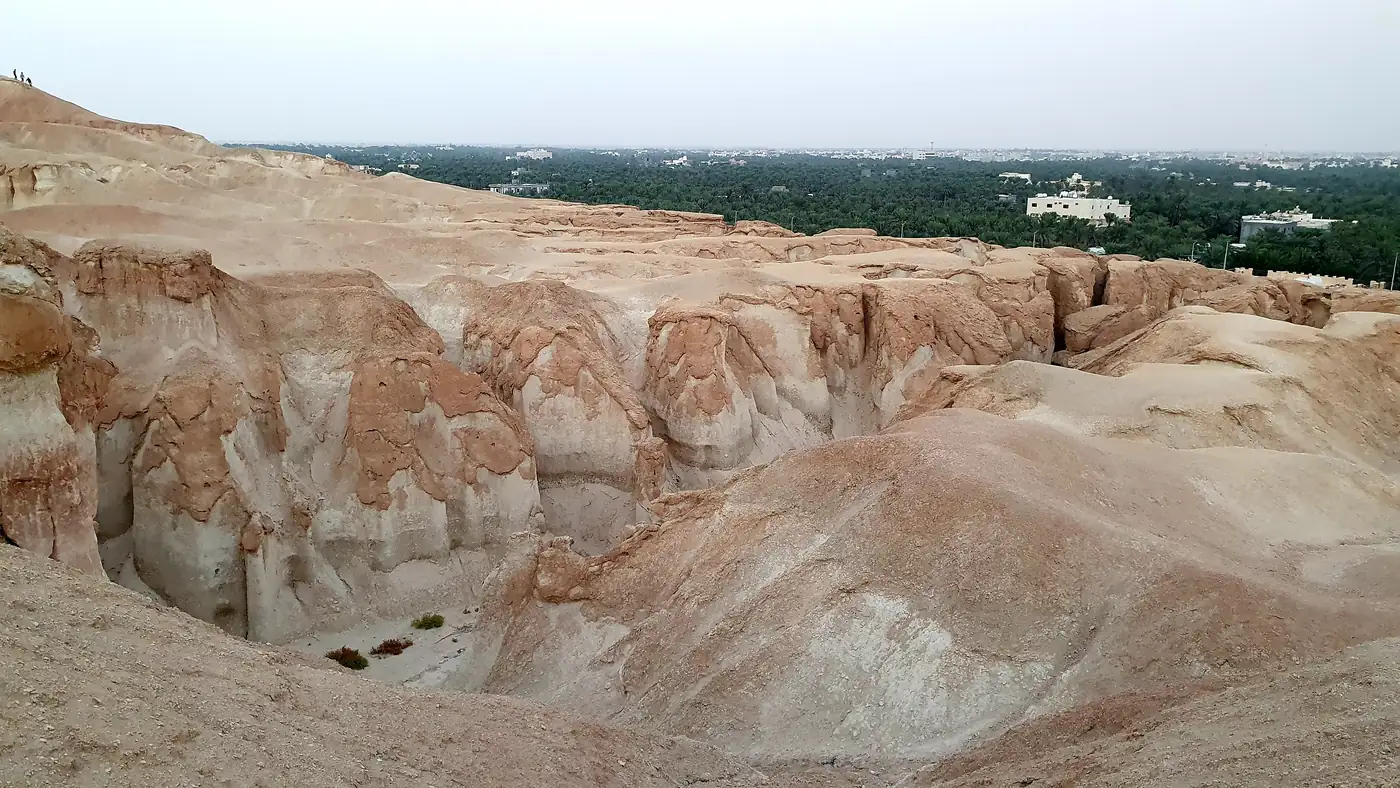
The Eastern Province is the Saudi Arabia most foreign visitors don’t know exists. Al-Ahsa, in the south, is the largest oasis in the world — 2.5 million date palms across an aquifer that has been irrigating the same land for at least 2,000 years. The town of Hofuf has Ottoman-era forts, a covered souq, and the Jawatha Mosque, one of the oldest mosques in the Arabian Peninsula. Out east, on the Gulf coast, the cities of Khobar and Dammam look across the causeway to Bahrain.
This is the part of Saudi Arabia where the Gulf air feels different — humid, salt-tinged, slower. The history is older here than the rest of the country and the food is better. Camel meat saloona in Hofuf, hammour grilled on the corniche in Dammam. Most visitors fly through Dammam International on their way to Bahrain. Stop a couple of nights.