Samarkand was the centre of the world once. Most people still haven’t been.
At its height under Timur in the fourteenth century, Samarkand was the most sophisticated city on earth — a planned capital pulling scholars, architects, and astronomers from across the Islamic world. The Registan, its central square, is still considered one of the finest pieces of urban design in human history. It also receives a fraction of the visitors that crowd Rome or Istanbul, because Central Asia is the part of the world travel agencies still mark as complicated.
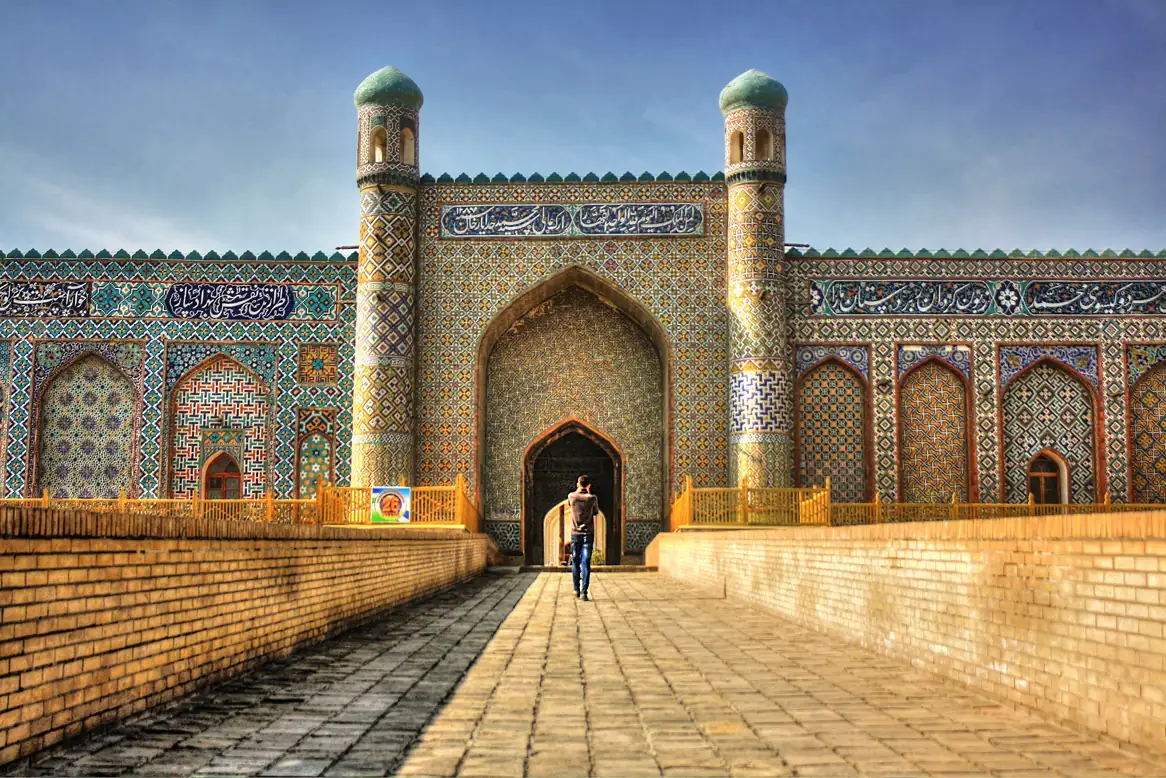
It isn’t complicated. Uzbekistan opened substantially to tourism in 2018, and the infrastructure — rail, accommodation, food — has grown quietly without the accompanying crowds. You can stand in the Shah-i-Zinda necropolis on a Tuesday morning, the tilework shimmering cobalt and turquoise in the Fergana Valley light, and have it almost entirely to yourself.
What makes Uzbekistan worth the journey is the density of it. Within a few hundred kilometres you have three UNESCO World Heritage cities — Samarkand, Bukhara, Khiva — each with a distinct character, built across different centuries, by different dynasties, for different reasons. And beyond the cities, the country opens into mountains and steppe that almost nobody visits at all.
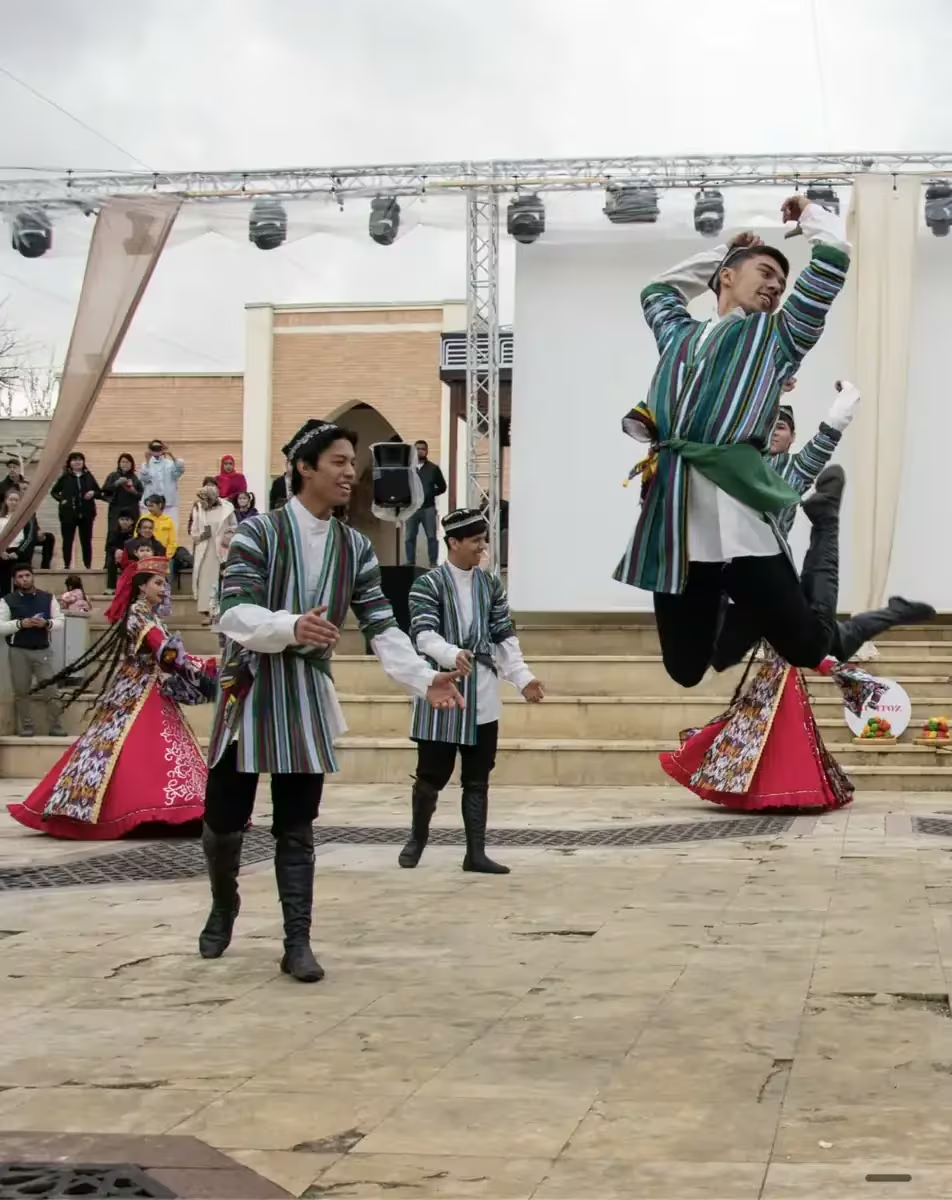
The people working here grew up in these landscapes. The guides are often history scholars who chose to stay. The hospitality — the non-stop tea, the plov, the household that insists you eat more — is not a product. It is a culture that has not yet learned to perform itself for visitors.
Sherzod
Uzbekistan local · Nuratau Mountains
“Most travellers come for Samarkand and stay for the silences in between — the homestay courtyards, the long drives across the steppe, the meals that happen at someone else’s table. Ask me about the Silk Road cities, the Nuratau homestay loop, the Aral Sea, the trekking, the Sufi shrines, what to eat in Khorezm. I’ll get the question to whichever of our team in country knows it best.”
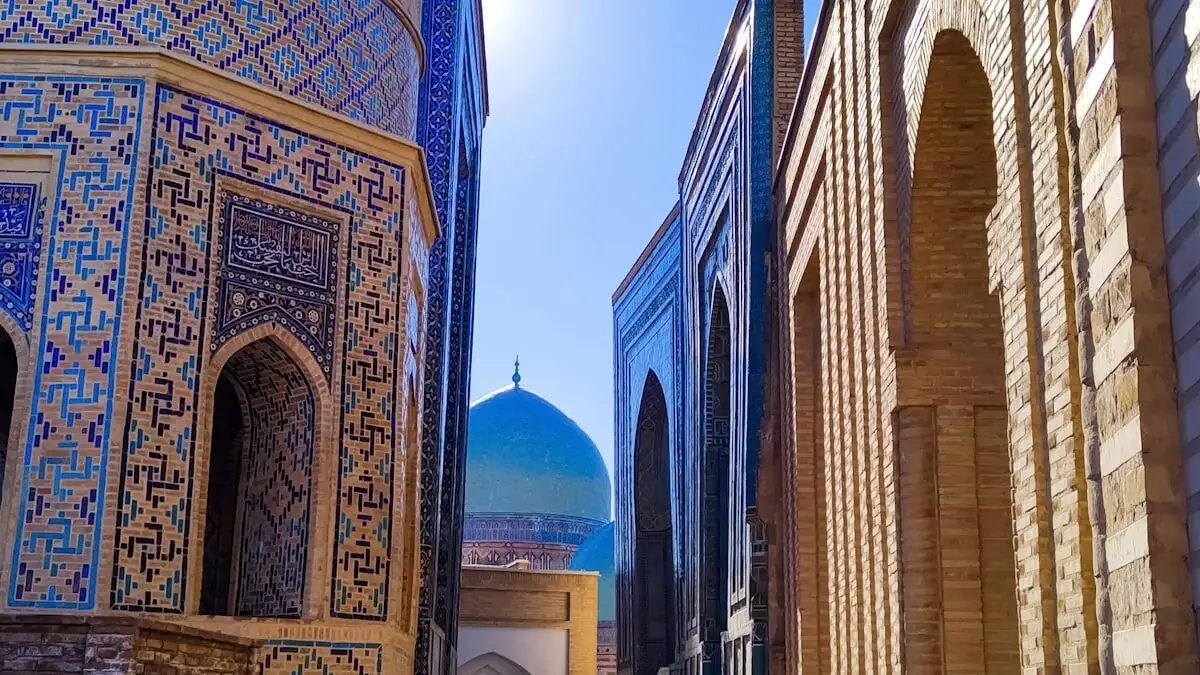
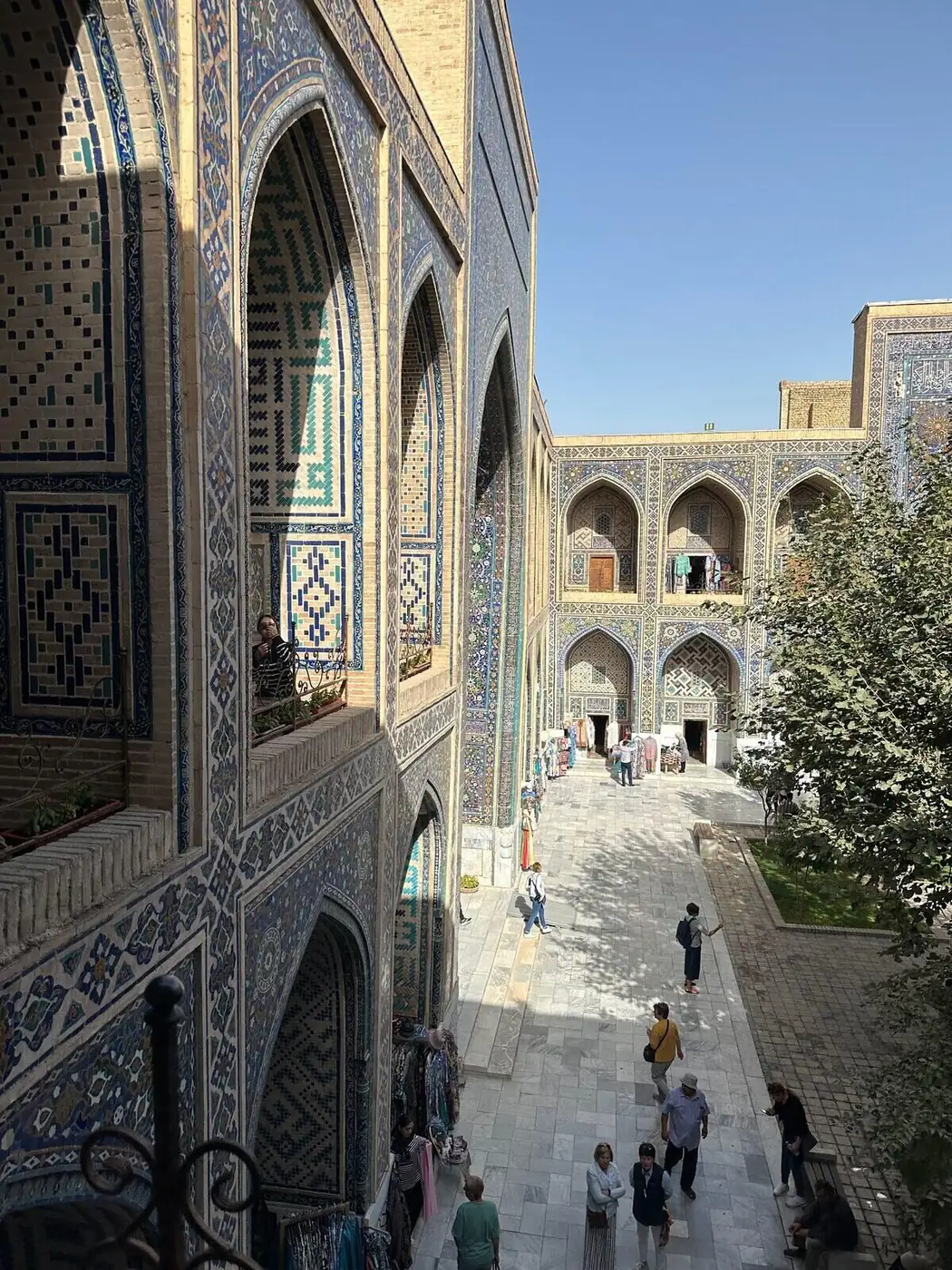
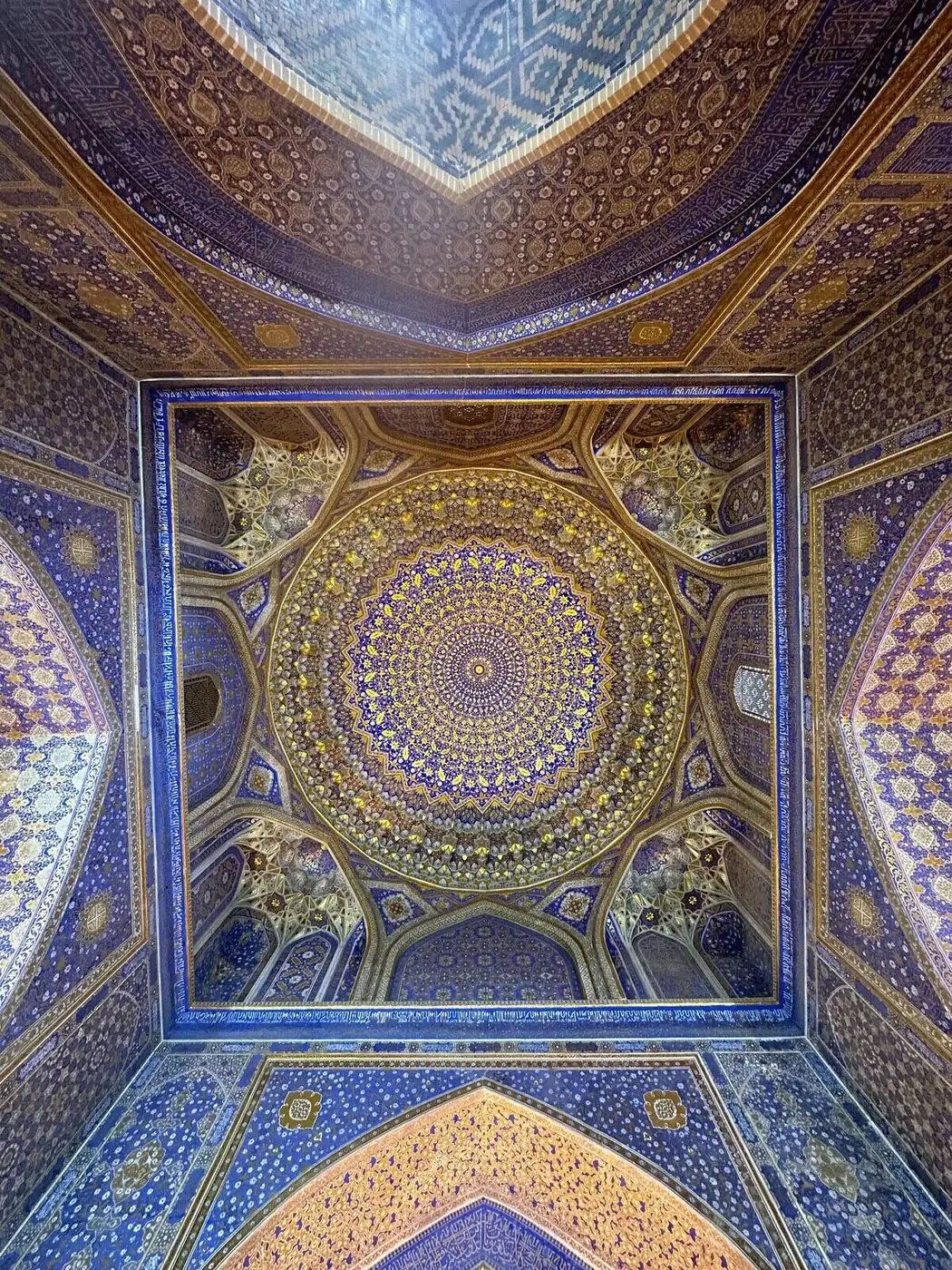
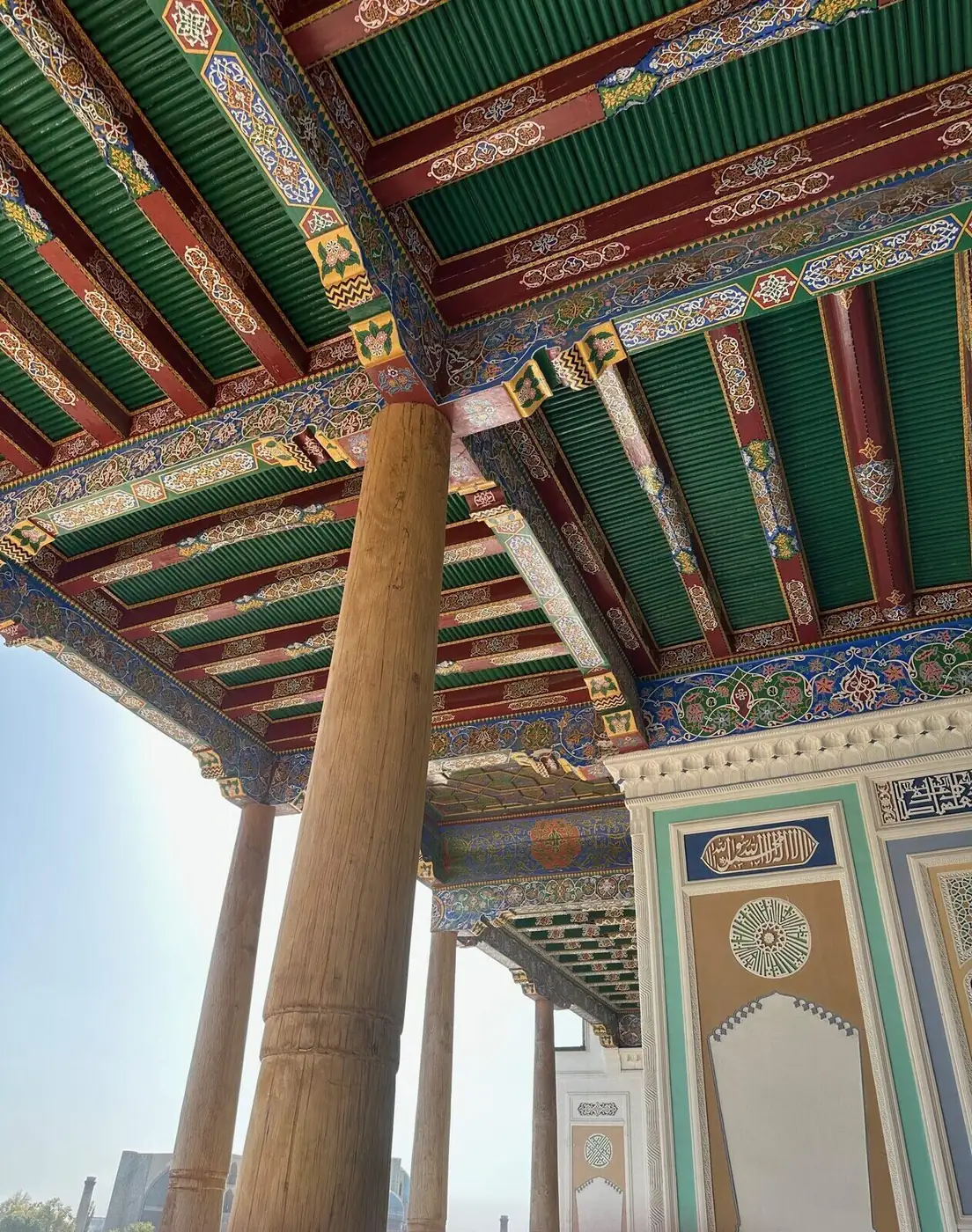
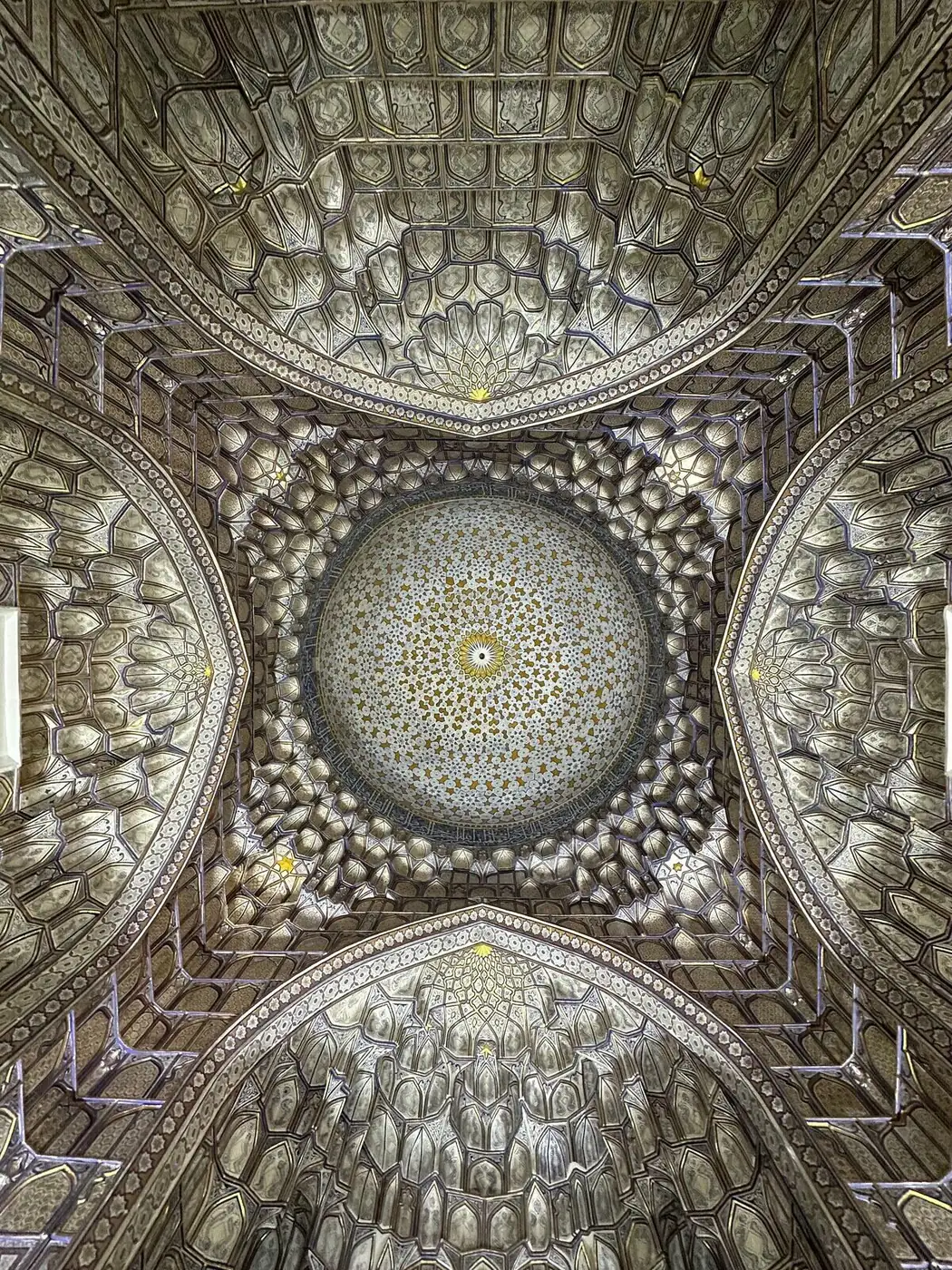
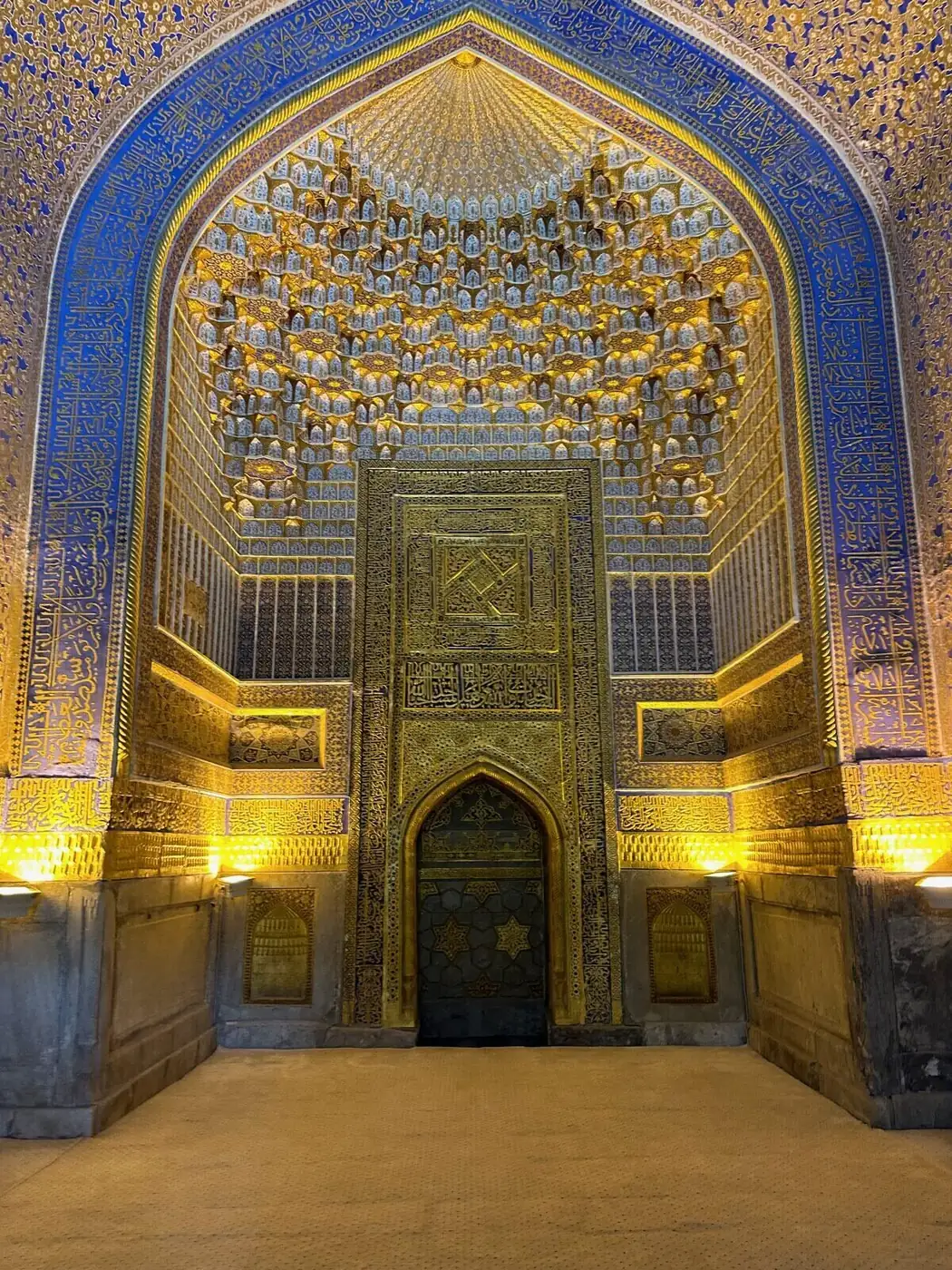
Samarkand, Uzbekistan · The Registan — Tilya Kori, Ulugh Beg & Sher Dor madrasas
Uzbekistan · Samarkand
The Blue Domes of the Registan
There is no adequate preparation for the Registan at dawn. You know it from photographs — the three madrasas arranged around a central square, the blue and gold tilework catching whatever light is available — but photographs cannot tell you about the scale of it, or the silence, or the way the mosaics change colour as the sun moves. You stand there and understand immediately why Timur chose this spot as the centre of his empire.
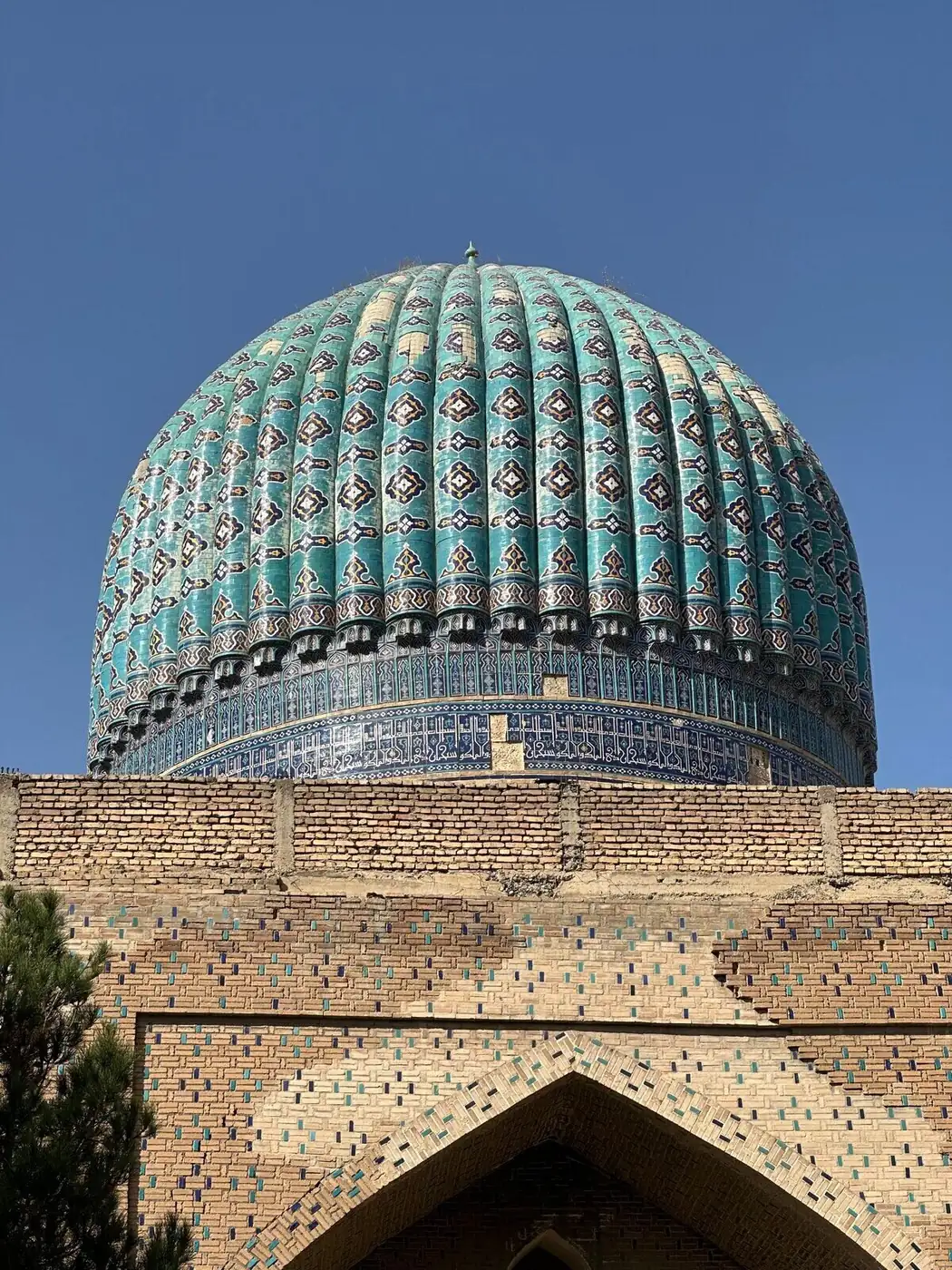
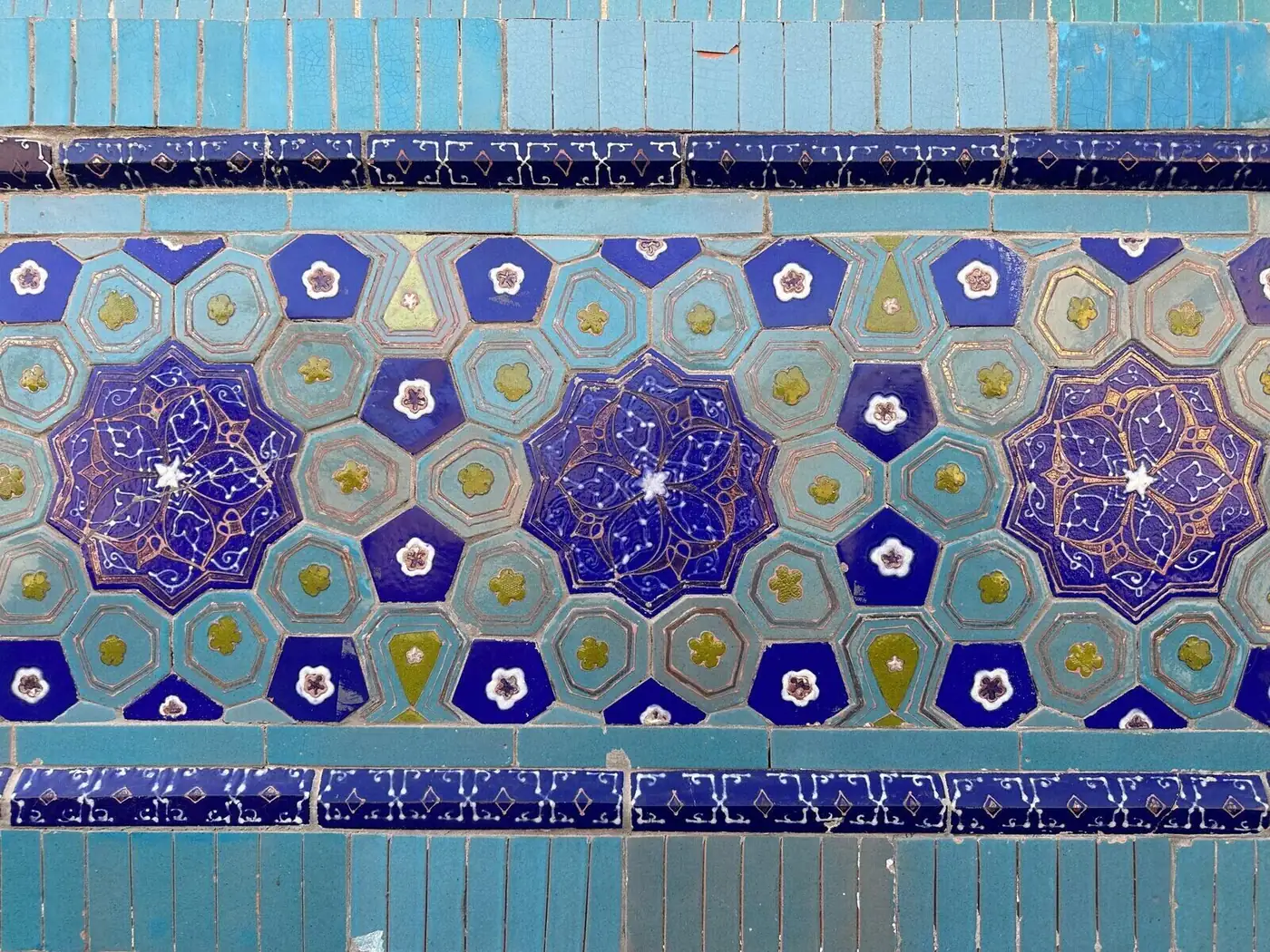
Samarkand was continuously inhabited for at least 2,700 years before Timur arrived and rebuilt it. The Registan as it stands today was assembled over three centuries, each madrasa added by a different ruler with a different vision, and yet the ensemble feels planned, inevitable, as though the square always knew what it was supposed to become. The tilework — lapis lazuli, turquoise, white, gold — was produced by craftsmen whose descendants still practice the art in workshops a few streets away.
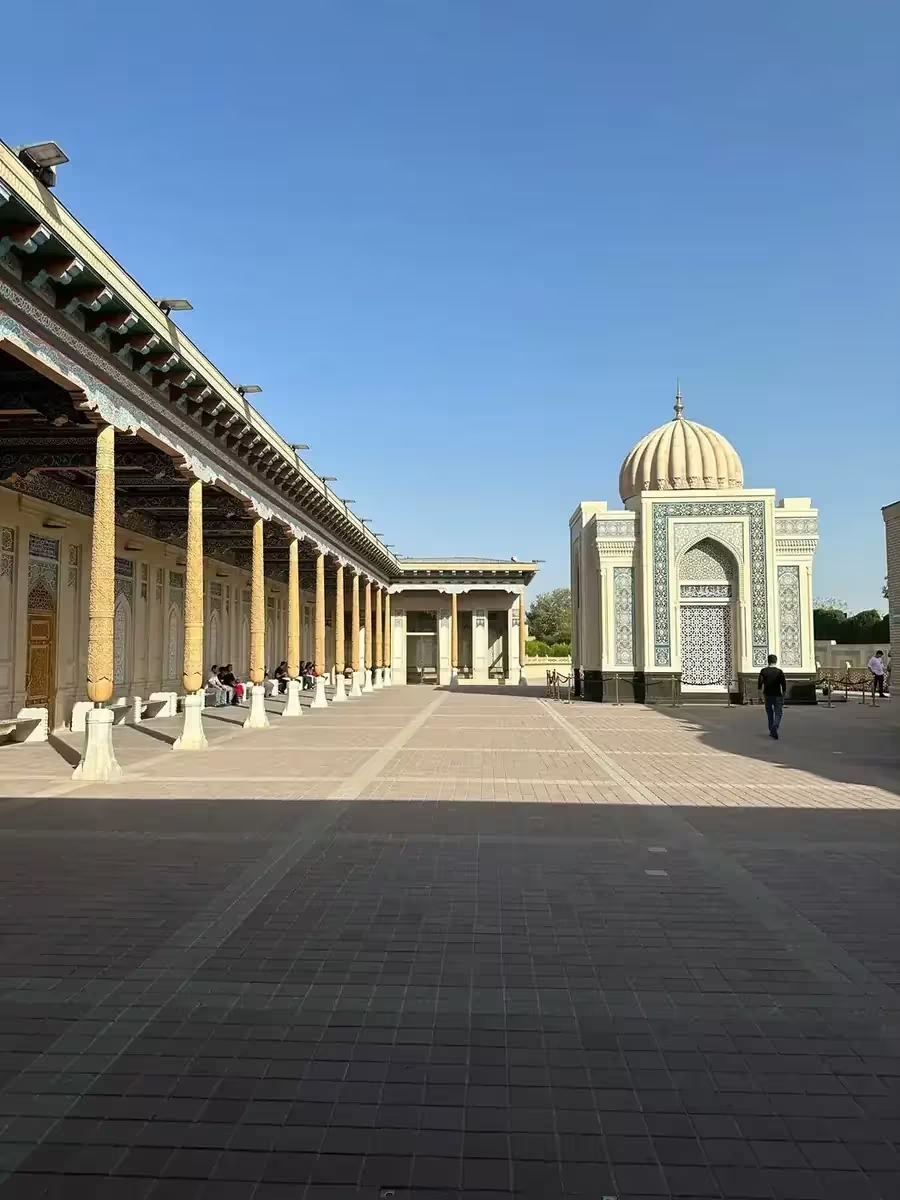
Beyond the Registan, Samarkand holds the Shah-i-Zinda, an avenue of mausoleums built over four centuries for the ruling class and their relatives, each chamber faced in a different pattern of tilework. It is quieter than the Registan and, for many visitors, more affecting — a long corridor of extraordinary craft, still used as a place of pilgrimage, where you feel the continuity between the fourteenth century and today rather than looking at it from behind a rope.
The guides who work these sites are often not tour operators by trade — they are historians, archaeologists, and scholars who found that teaching visitors was the most effective way to make their knowledge pay. Your week with one of them is unlike any cultural tour you’ve taken. They have arguments about the tilework. They know which restorations are authentic and which are Soviet approximations. They will tell you which of the mausoleums the tourists skip and why you shouldn’t.
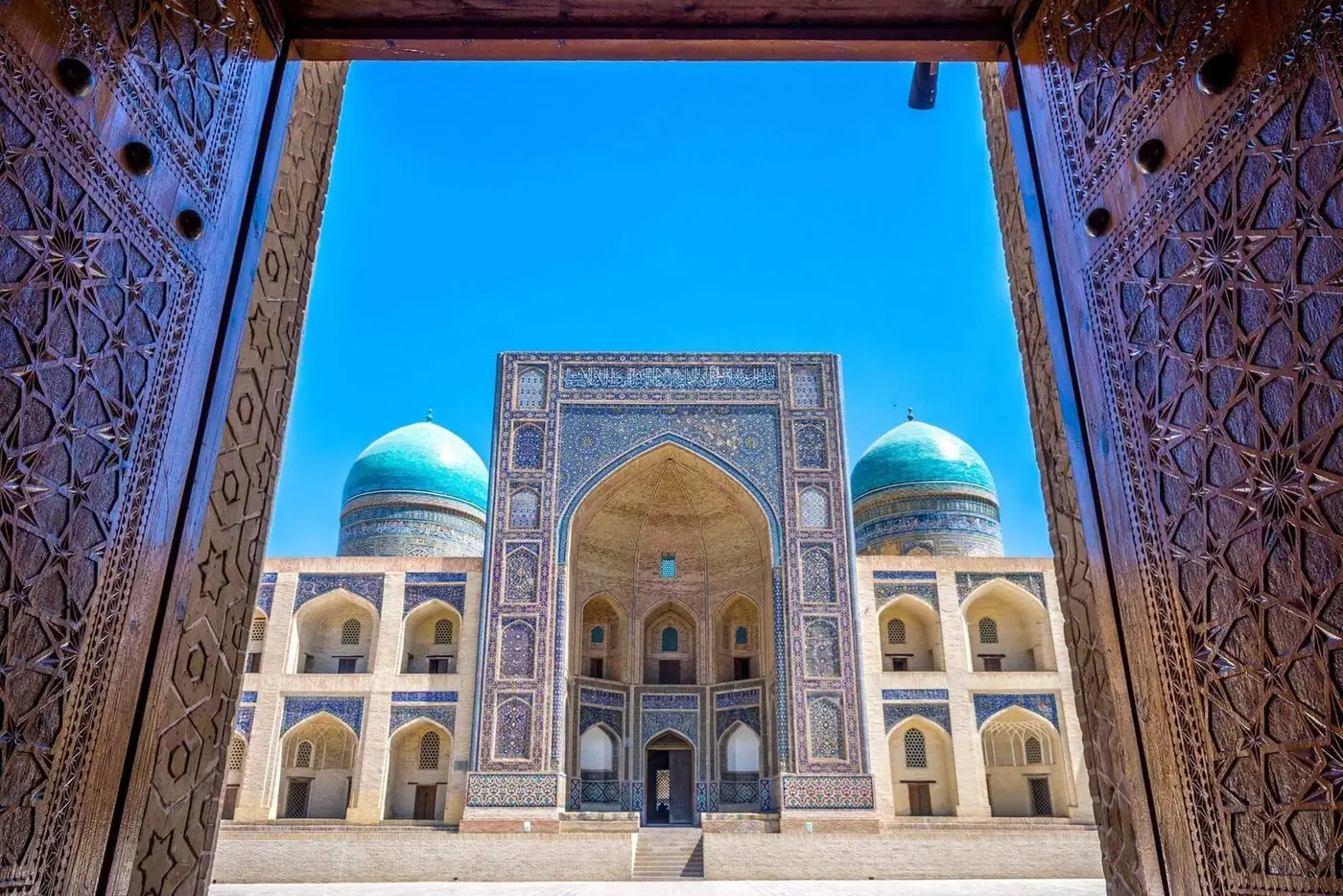
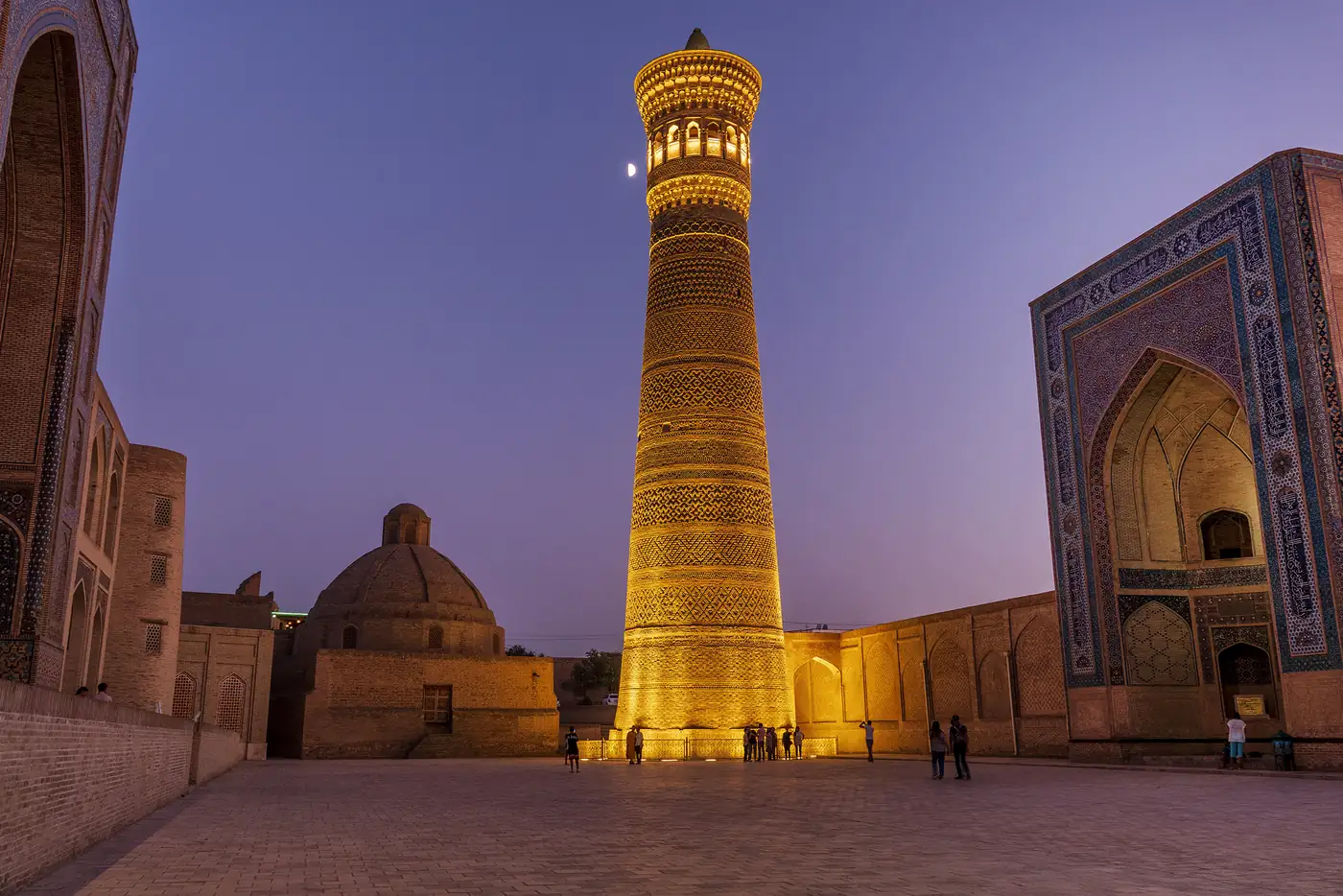
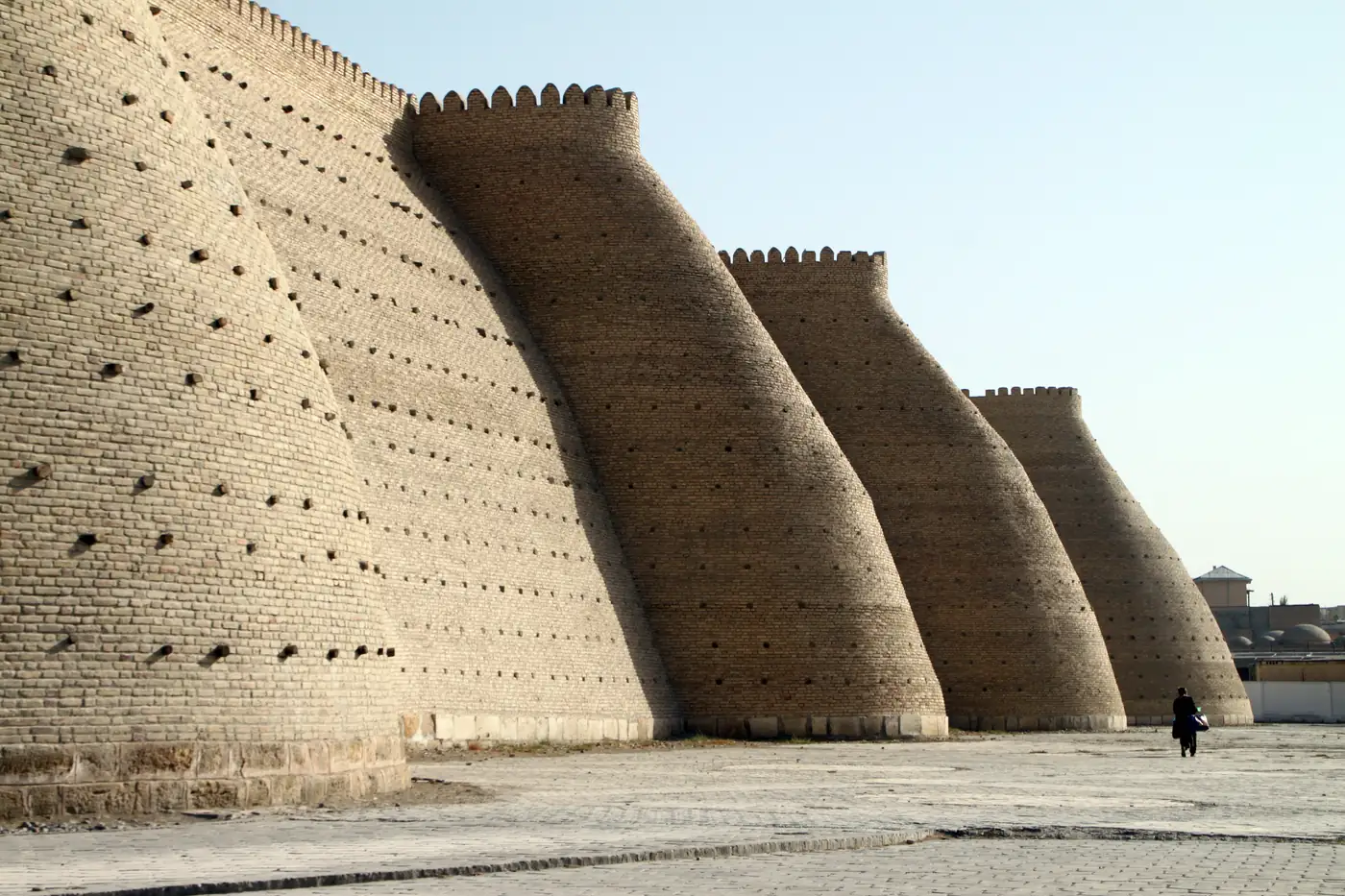
Bukhara, Uzbekistan · The Kalon Minaret and old city
Uzbekistan · Bukhara
The Forbidden City of the Silk Road
Bukhara was closed to non-Muslims for most of its history. The emir’s word was law, the clergy’s authority was total, and the city turned inward — a dense tangle of madrasas, mosques, bazaar domes, and caravanserai that evolved over a thousand years without much reference to the outside world. It shows. Bukhara feels different from Samarkand in a way that is hard to articulate but immediately legible: more lived-in, more medieval, less self-conscious about its history.
The Kalon Minaret has dominated the old city since the twelfth century. It is 47 metres high, built from a particular kiln-fired brick that has proven almost indestructible — Genghis Khan supposedly spared it when he sacked the rest of the city, because he had to tilt his head back to look at it and was unwilling to give any structure that satisfaction. The mosque at its base is still in daily use. The call to prayer still echoes off the same walls it has echoed off for nine hundred years.
Around the Kalon, the trading bazaars — domed, vaulted, built by the Shaybanids in the sixteenth century specifically for the Silk Road traffic — still function as markets, selling the silk and spice and crafts they always did, now to a smaller and more curious clientele. If you spend two days walking the covered bazaars and the old Jewish quarter and the Ark fortress, you will have navigated essentially the same urban landscape that merchants from China, Persia, and India navigated when the Silk Road was at its height.
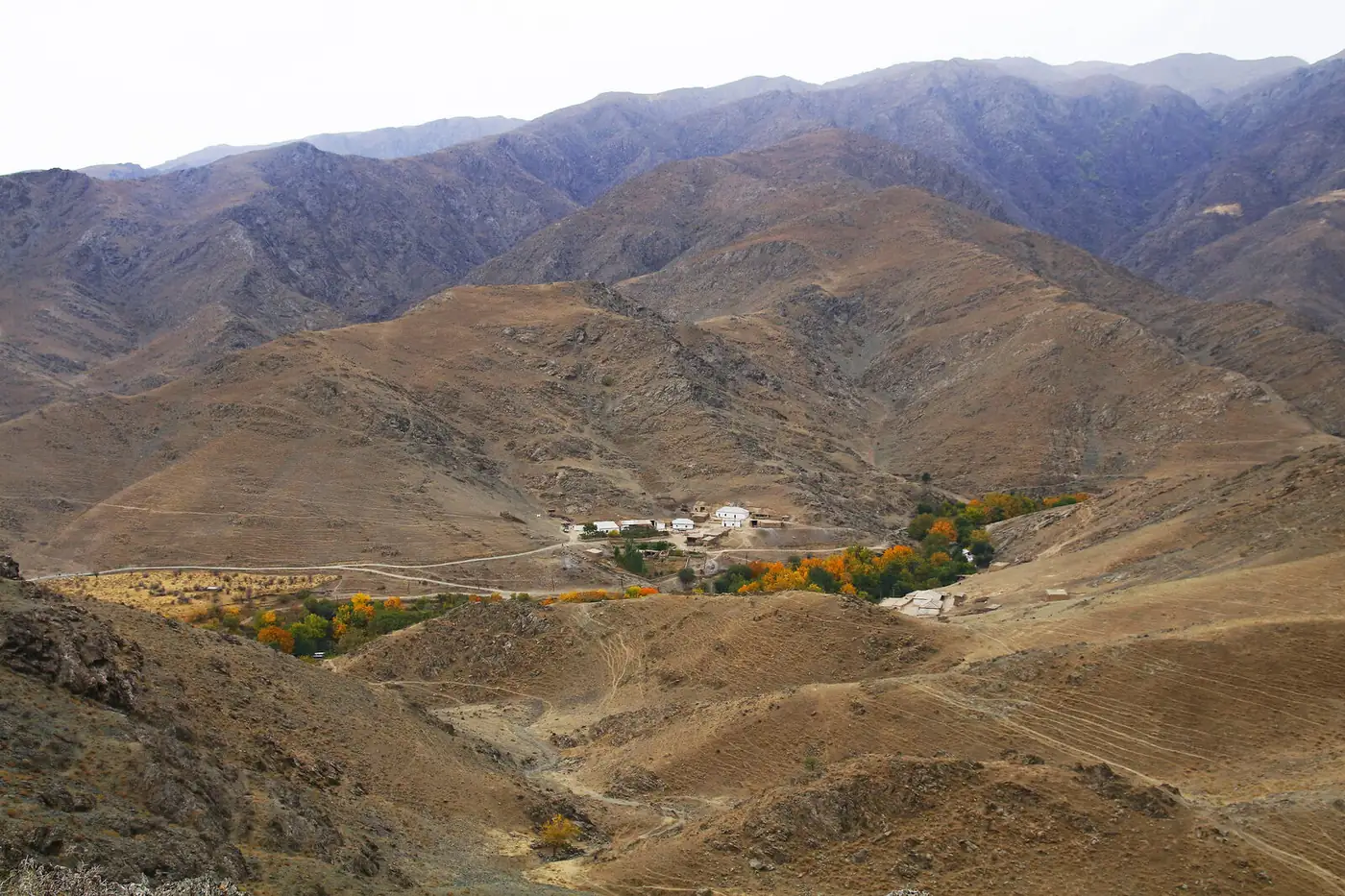
Nuratau Mountains, Uzbekistan · Walnut forests and village homesteads above the Kyzylkum
Uzbekistan · Nuratau Mountains
Untouched Highlands Above the Steppe
Most visitors to Uzbekistan do not get to the Nuratau Mountains. The cities are too good, the train too fast, the itinerary too full. This is, in retrospect, the mistake. The Nuratau range — a UNESCO biosphere reserve — runs along the southern edge of the Kyzylkum desert, rising from 200 metres to nearly 2,000 in less than an hour’s drive. The walnut forests here are estimated to be three thousand years old. The villages in the foothills have been continuously inhabited for longer than Samarkand has been a city.
The community-based tourism network in Nuratau is one of the few in Central Asia that genuinely functions. Families in the villages of Sentob, Hayat, and Fakhirya take in visitors — not as a commercial enterprise, but as a continuation of the hospitality ethic that has governed mountain communities in this region for centuries. You sleep in a room in a family compound, eat what the household eats, and wake to a landscape that has no equivalent context in Western travel writing because almost no one has been there to write about it.
The endemic bird life — over 170 species — brings ornithologists from across Europe and Asia. The walking routes across the range, some of them ancient trading paths connecting valley settlements, are unmarked on most maps and navigated by local guides who learned them from their fathers. The Kyzylkum desert stretches to the north, and on clear evenings from the ridge you can see its edge from three hundred metres above it.
This is not luxury travel. The beds are simple, the hot water is intermittent, and the paths require a reasonable level of fitness. What it offers instead is the thing that is genuinely scarce in modern travel: a place where your presence has not yet shaped what the place becomes.
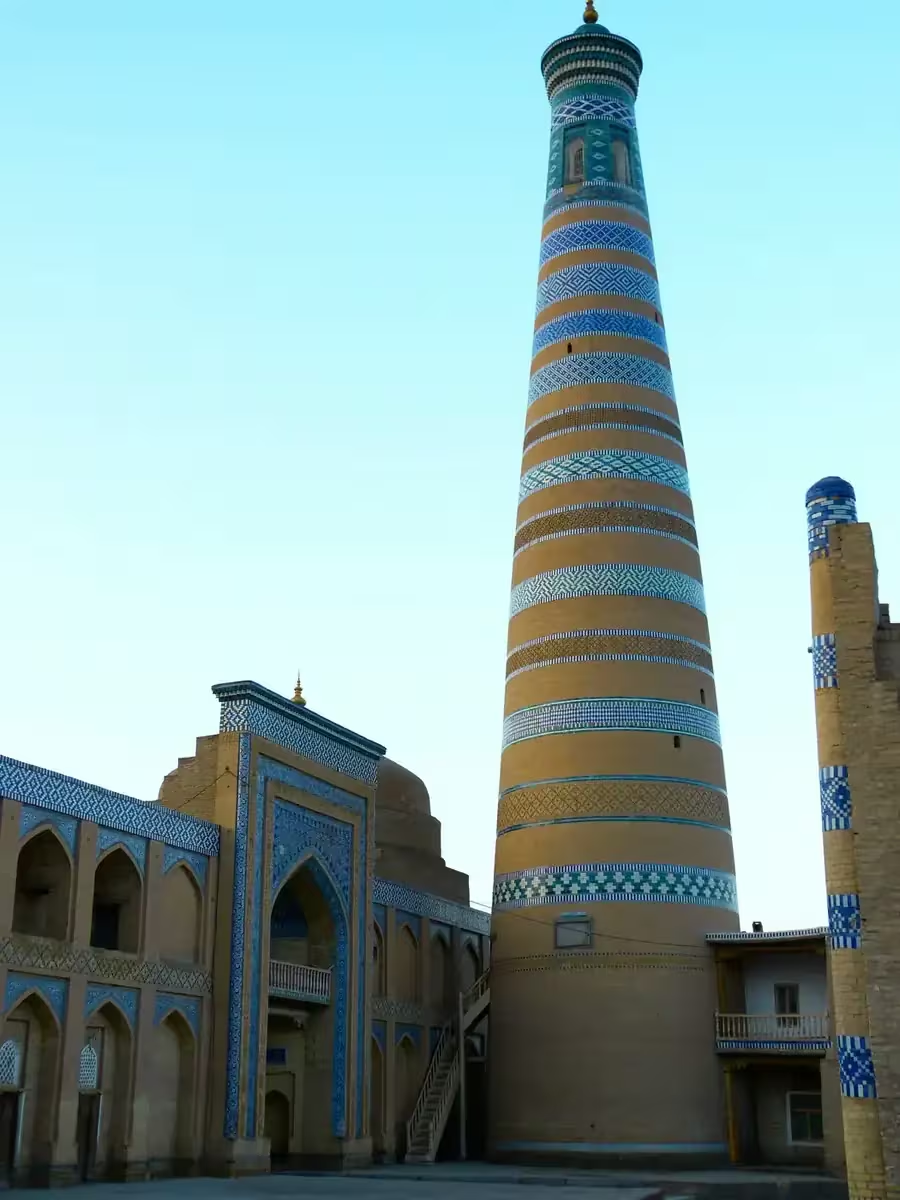
Khiva · Itchan Kala, the walled inner city
Uzbekistan · Khiva & Khorezm
The Walled Museum-City
Khiva is what happens when a Silk Road city is preserved so completely that it becomes its own museum. The walled inner city — Itchan Kala — is roughly 26 hectares of mosques, madrasas, and minarets contained inside walls that haven’t been breached since the Khanate fell to the Russians in 1873. The shorter minaret in the central square, Kalta Minor, was started in 1851 and abandoned mid-construction; it’s the unfinished thing that catches the eye in every photograph.
In summer, Khiva is hot and crowded. In autumn, it empties out and the light goes amber an hour before sunset against tilework that has been blue and turquoise for six hundred years. Stay a full day inside the walls. The walking circuit is two hours; the staying is the point.
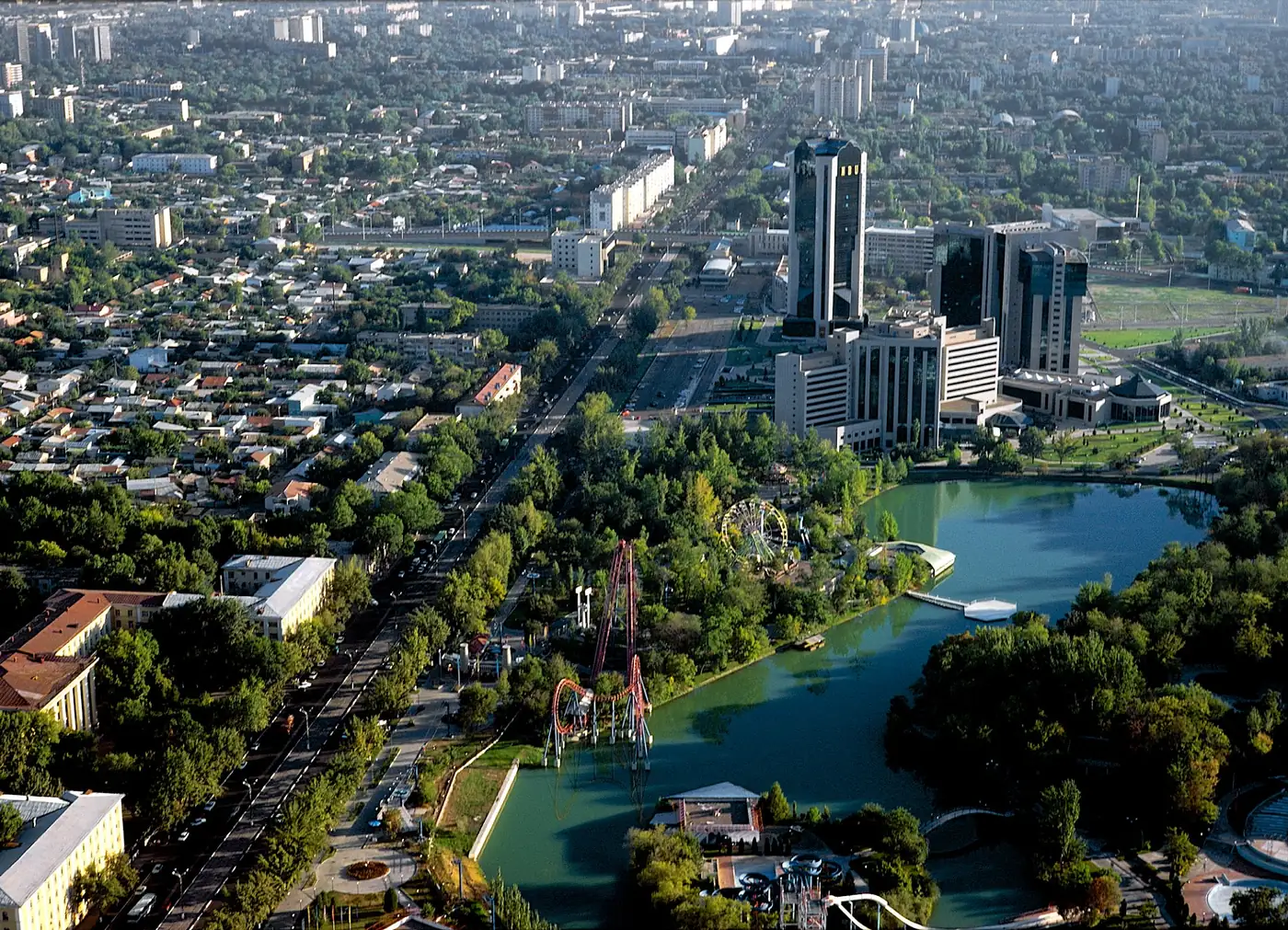
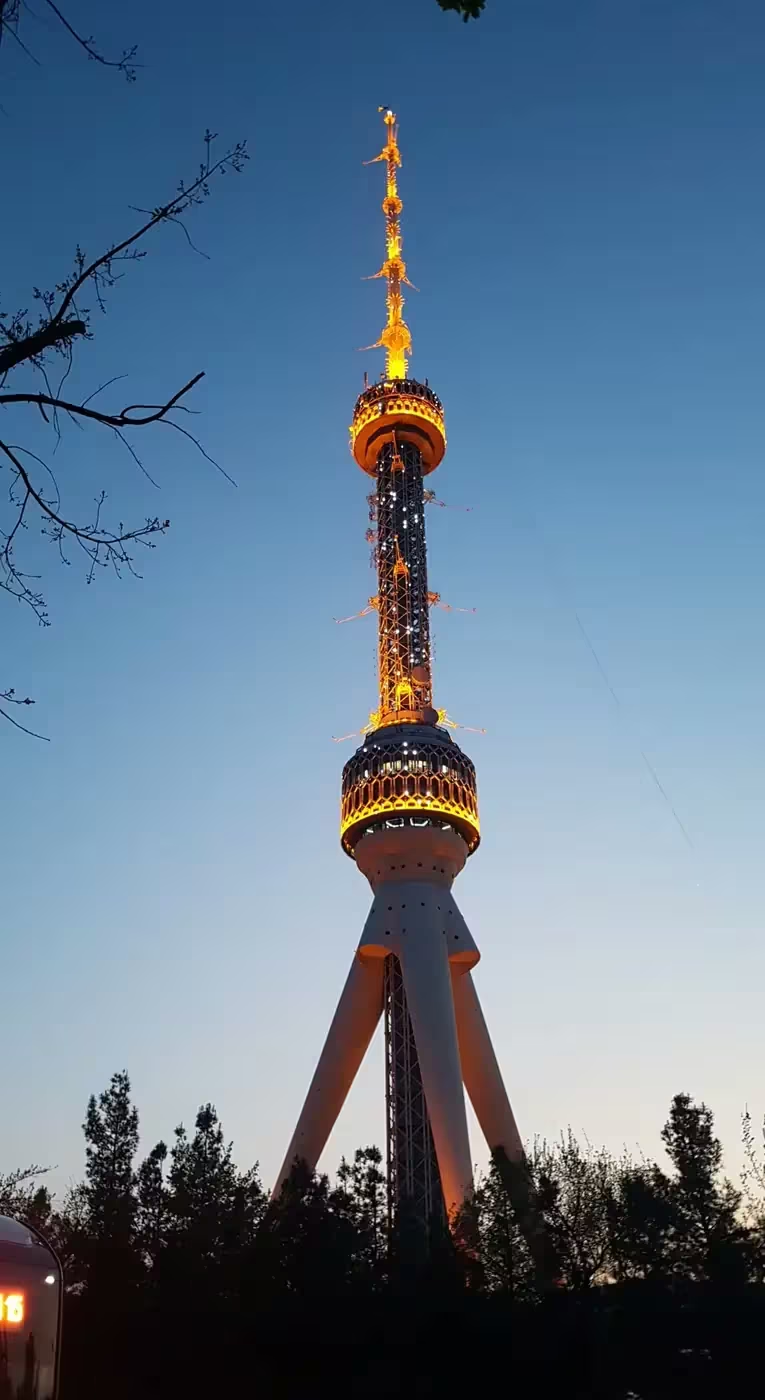
Tashkent · the Soviet-modernist capital
Uzbekistan · Tashkent
The Capital That Soviet Modernism Forgot to Tear Down
Tashkent was levelled by an earthquake in 1966 and rebuilt by Soviet planners on a grand scale: long boulevards, brutalist hotels, a metro decorated like a series of state-funded chapels. The Chorsu Bazaar, under its turquoise dome, sells everything from non bread to Chinese plastic toys. The State Museum of Applied Arts is housed in a former tsarist diplomat’s home, every wall and ceiling painted by hand.
Most travellers transit through Tashkent on their way to Samarkand or Bukhara. They miss the metro. Each station is its own universe — Kosmonavtlar, with cosmonaut portraits in glass, is the most photogenic; the brutalist concrete arches at Pakhtakor are the better line. A flat fare gets you the whole network. Spend an afternoon riding it.
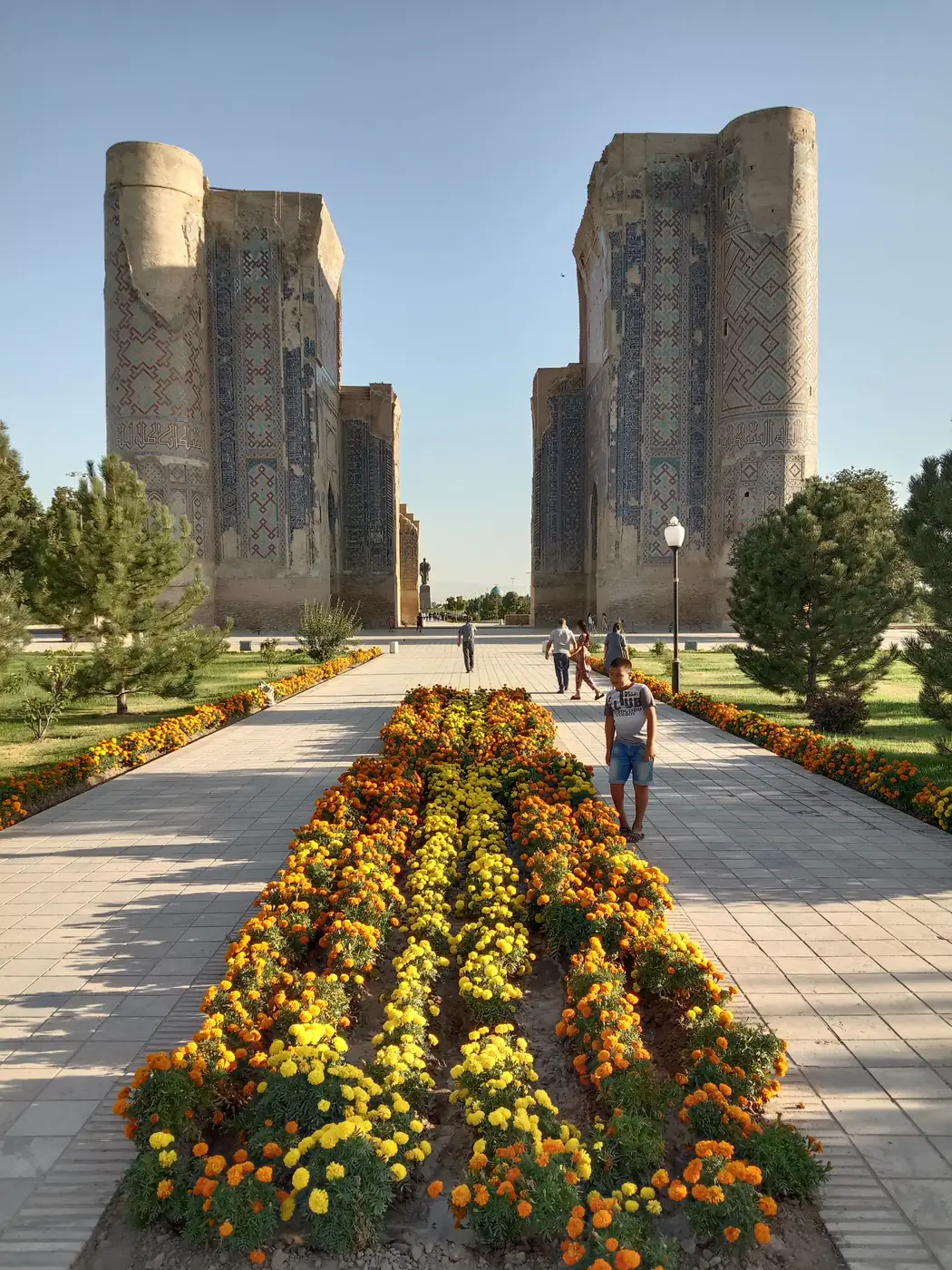
Shahrisabz · Timur’s birthplace
Uzbekistan · Shahrisabz
Timur’s Birthplace
Shahrisabz, three hours south of Samarkand by road, is where Amir Timur — Tamerlane — was born in 1336. The Ak-Saray Palace, built for him at the height of his empire, is now mostly rubble: a single 50-metre archway and one half of a façade, blue-tiled and impossible. The figures along the top are sized to be readable from the valley below. He intended to be visible from far away.
The town itself is small and unassuming. There are several other Timurid-era monuments scattered between bazaars and ordinary apartment blocks, and the surrounding hills are walked by shepherds the same way they were in the fourteenth century. A long day-trip from Samarkand, or one quiet night here.
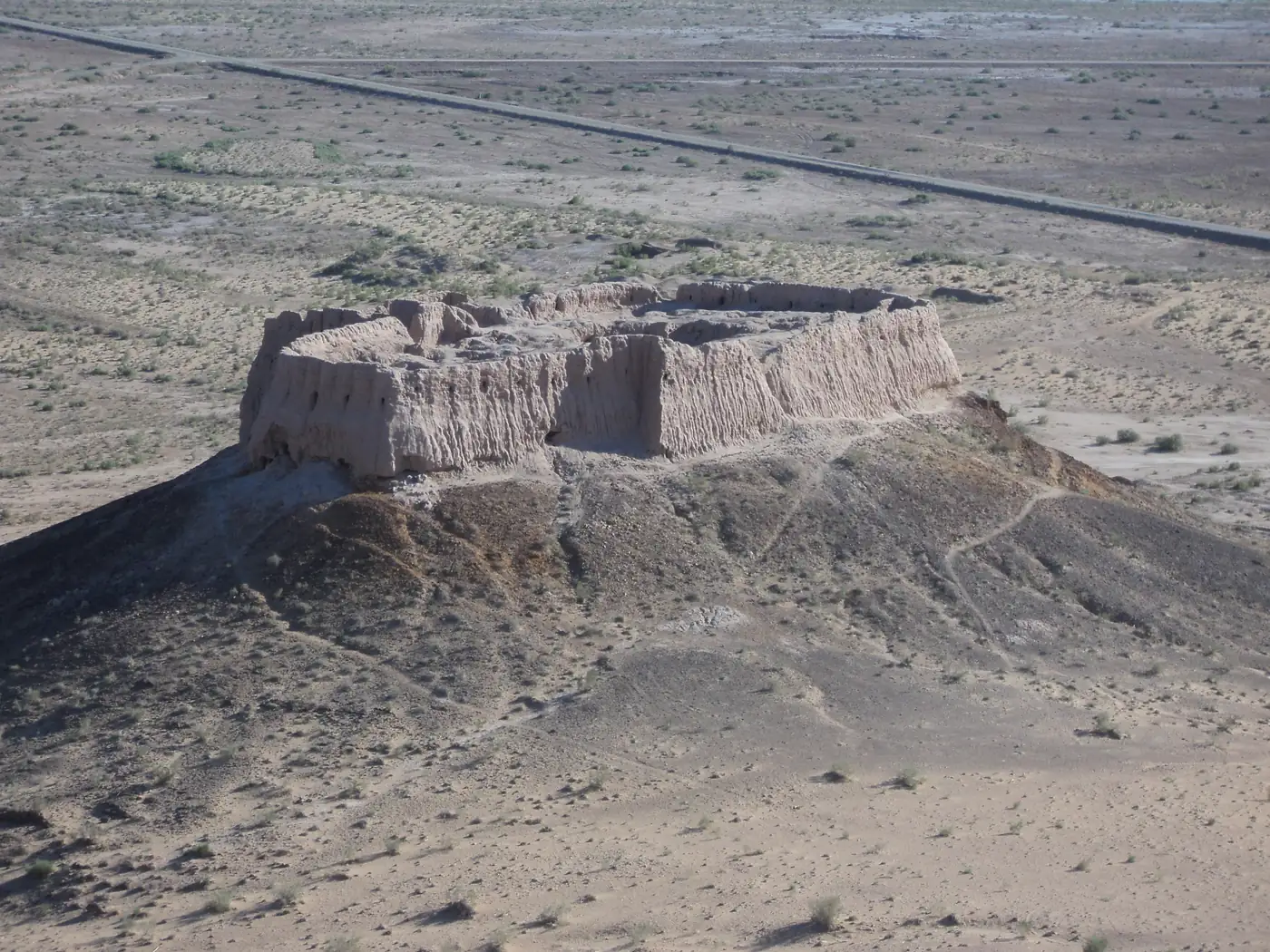
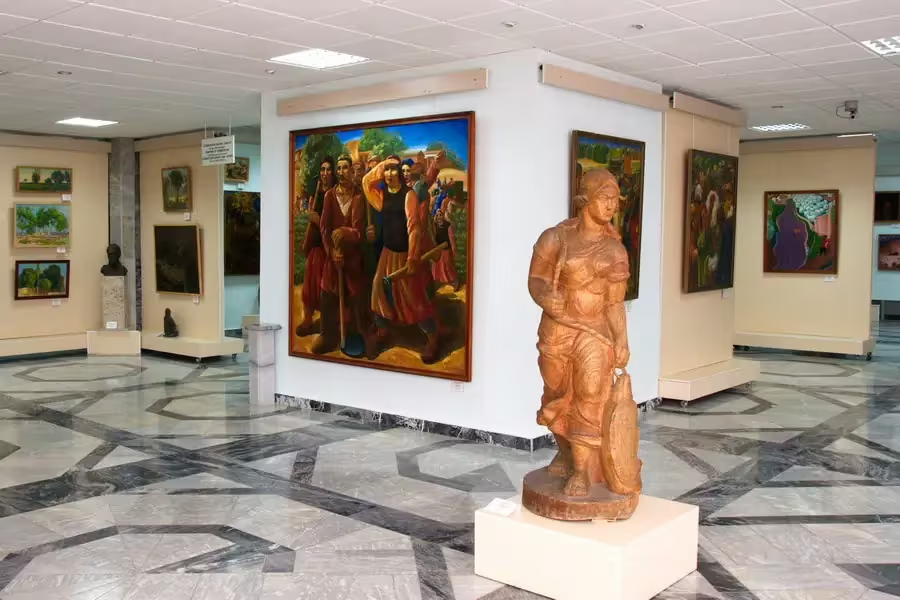
Karakalpakstan · what the Aral Sea left behind
Uzbekistan · Karakalpakstan & the Aral Sea
What the Aral Sea Left Behind
The Aral Sea was the fourth-largest lake in the world until Soviet cotton irrigation diverted the rivers that fed it. By 2014, it was less than 10% of its original size. Today the dried bed — the Aralkum Desert — is a 60,000 square kilometre salt flat with rusting fishing boats stranded miles from any water. The town of Moynaq, once a thriving port, is now an inland village with a memorial cemetery of ships in what used to be the harbour.
Two hours north, in Nukus, is the Savitsky Museum: one of the most important collections of Russian avant-garde art in the world, housed in the most unlikely city imaginable. Avant-garde painters whose work was banned in Moscow in the 1930s sent canvases to a curator in the desert who hid them. The collection survived. It is the second-largest in the world after St. Petersburg’s. Most visitors don’t realise it’s here until they see it.
Fergana Valley · silk and ceramics
Uzbekistan · Fergana Valley
The Most Fertile Valley in Central Asia
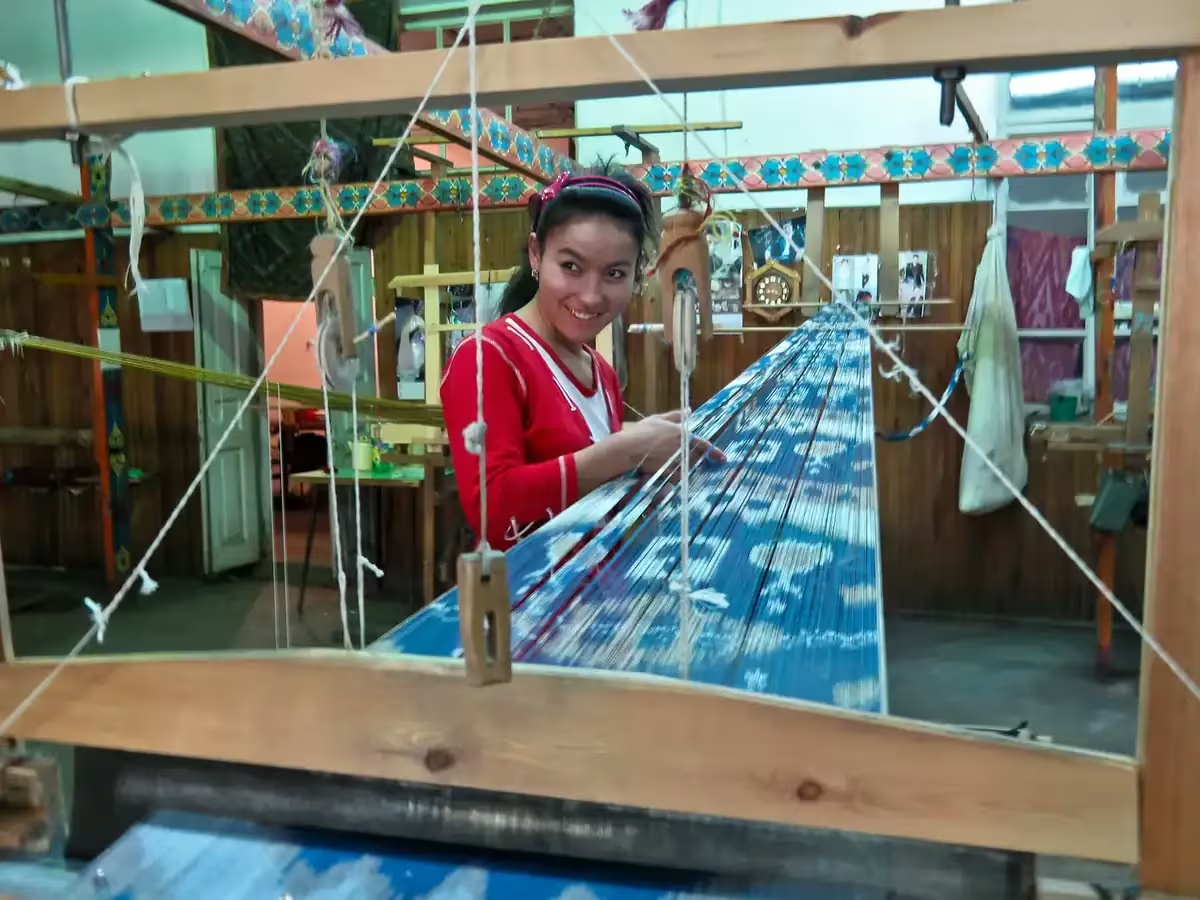
The Fergana Valley is what happens when three rivers, a fault line, and 2,500 years of cultivation produce the most fertile patch of ground in Central Asia. The valley is shared between Uzbekistan, Tajikistan, and Kyrgyzstan, and the borders zigzag in ways that confuse cartographers. The Uzbek side — Andijan, Margilan, Kokand — is the historic centre of silk weaving and ceramics. The workshops in Margilan still produce ikat fabric the same way they did under Babur in the 1490s.
The valley is rarely on standard Uzbekistan circuits — most tourists do Samarkand → Bukhara → Khiva and skip east. That’s the opportunity. The Friday bazaars in Andijan and the silk workshops of Margilan are where Central Asian craft is still alive, not curated for visitors. You will probably be the only foreigner in the room.
Termez · the Buddhist past on the Afghan border
Uzbekistan · Termez & Surxondaryo
The Buddhist Past on the Afghan Border
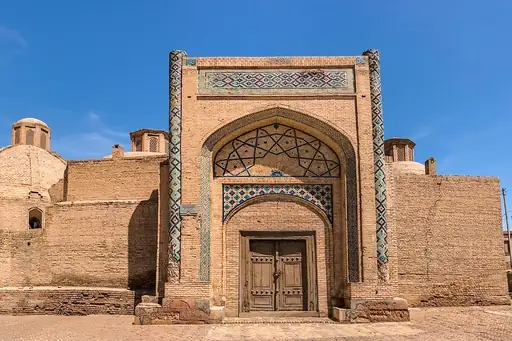
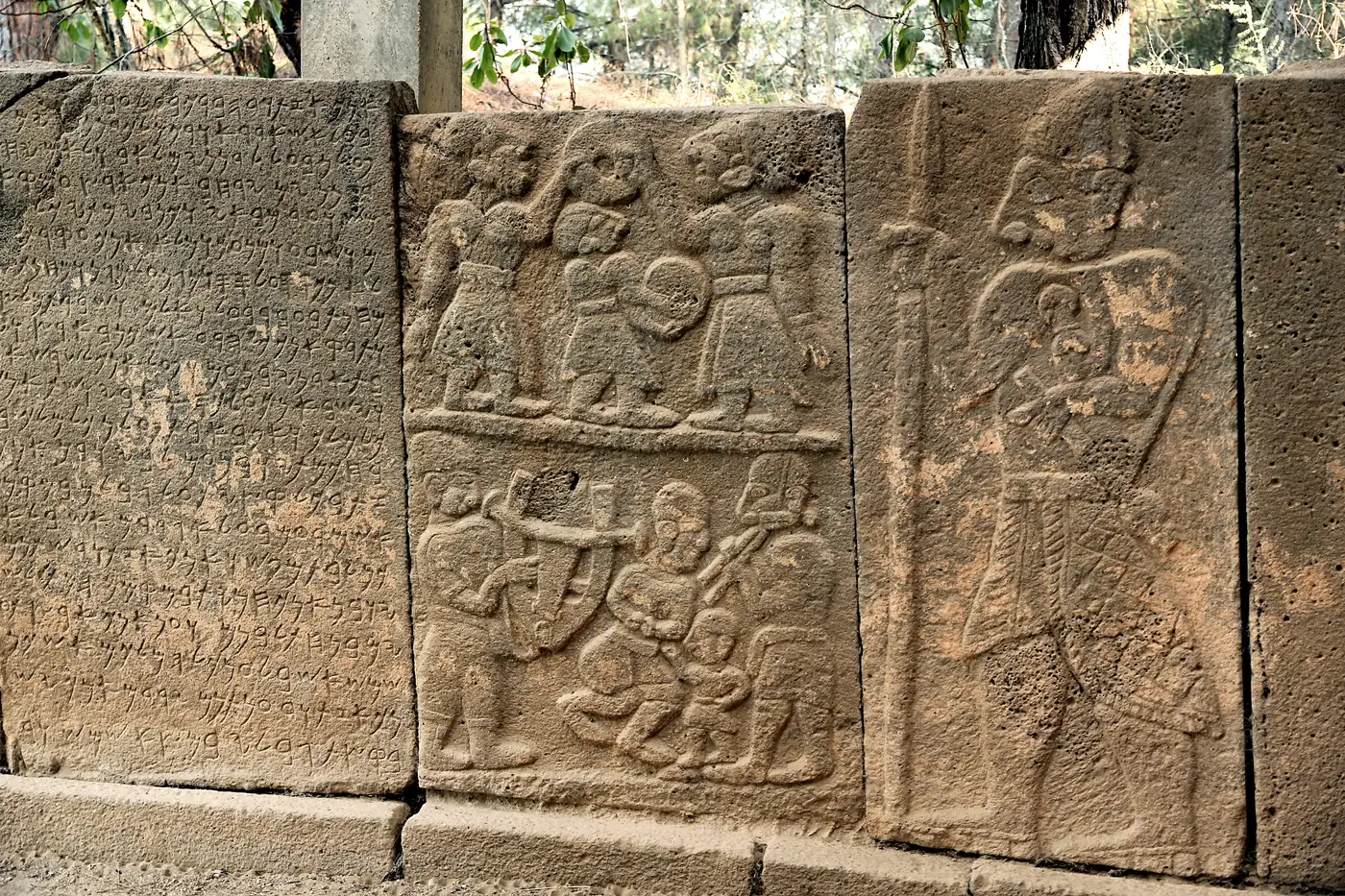
Termez sits on the Afghan border, on the north bank of the Amu Darya — the river the Greeks called the Oxus. Before Islam, this was a major Buddhist centre. The ruins of Kara Tepe and Fayoz Tepe, two monastic complexes from the first to fourth centuries CE, are on the outskirts of town. Stupas, monastery walls, and fragments of statuary still emerge from the sand whenever someone digs.
Across the river, the lights of northern Afghanistan are visible at night. Termez is a sensitive area — military presence is real, photography is restricted in places — but the historic sites are open, and the Sultan Saodat memorial complex, with its 11th-century mausoleums, is one of the most peaceful afternoons in the country.