Bali was never the whole story. Most travellers stop there anyway.
Indonesia is a country of 17,000 islands, 700 languages, and roughly the same number of distinct cultures. The third-largest democracy on earth, the world's largest Muslim population, and an archipelago that stretches further than the United States is wide. Most travellers see one island and assume they have seen the country. They have not.
What lies beyond Bali is, frankly, where Indonesia gets interesting. Sumatra holds Lake Toba — a 100-kilometre crater filled with water, the result of the largest volcanic eruption in two million years. Sulawesi has Tana Toraja, where the funerals last days and the houses are shaped like boats. Flores has the dragons. Raja Ampat has the most biodiverse marine life on earth. Sumba has wild horses and megalithic graves and one paved road.
The connecting thread is logistics. Most of these places require flights, boats, language intermediaries, scholar guides — operator-essential travel that no hotel-booking website can stitch together. The travellers who go past Bali tend to be on a second or third Indonesian trip, working through the country one region at a time, usually with the same local fixer.
It's a country that is still in motion. Jakarta is becoming Nusantara, the new capital being built in Kalimantan. The infrastructure outside the popular islands is improving every year. Whatever rule you read about Indonesia in 2010 is probably wrong now. The right time to go is whichever moment finds you with three weeks free.

Bali · beyond the south-coast circuit
Indonesia · Bali
Beyond the South-Coast Circuit
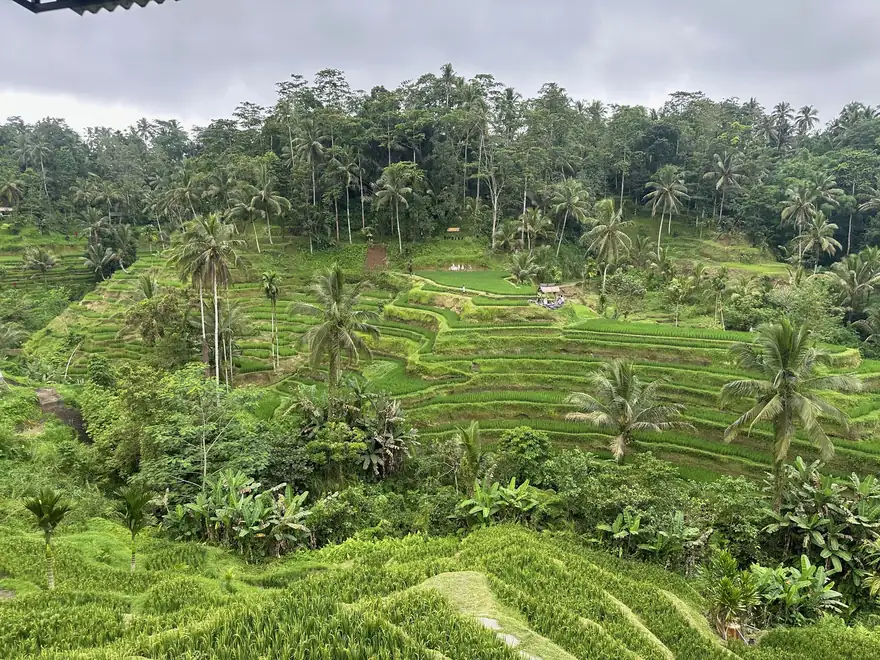
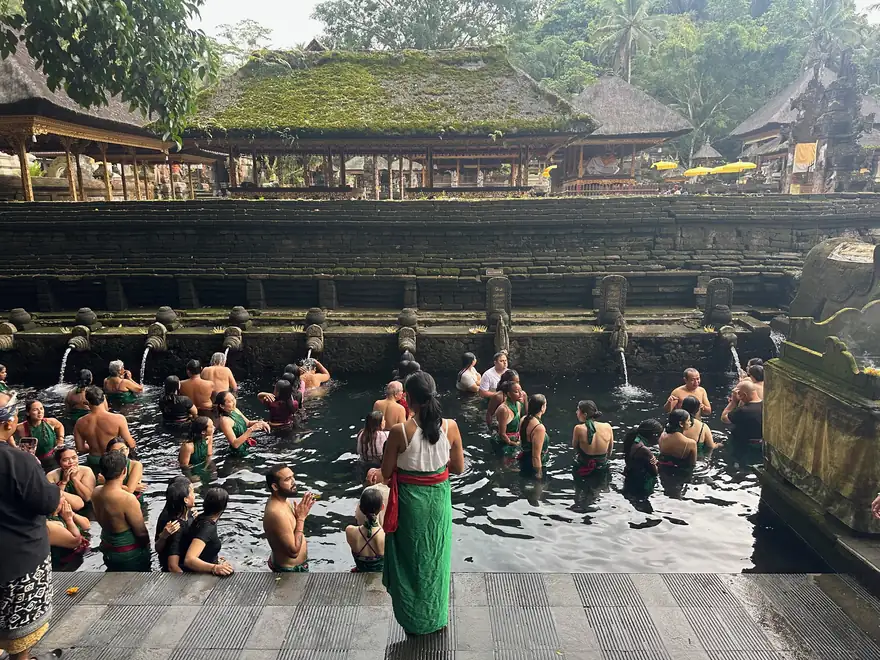
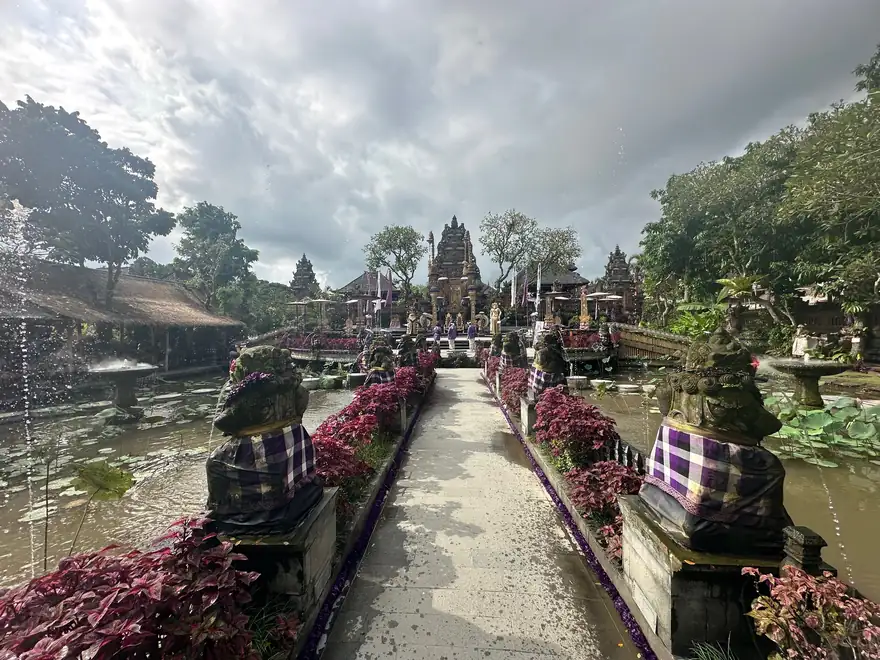
Bali's south coast — Seminyak, Canggu, Uluwatu — is what most travellers know, and what's increasingly written about as overrun. The interior tells a different story. Ubud retains its temple-and-rice-terrace identity if you're willing to walk twenty minutes off the main road. Sidemen, in the eastern hills, looks the way Ubud looked in the 1990s. Munduk, in the central highlands, has waterfalls and coffee plantations and almost no traffic.
The eastern temples are still working temples, used by the Balinese for ceremonies that have nothing to do with visitors. Lempuyang, on the slopes of Mount Lempuyang, has a queue at sunrise and silence by mid-morning. Besakih, the mother temple, requires a guide who knows when not to enter — the calendar of Balinese ceremonies is dense and largely opaque to outsiders.
A good Balinese fixer is the difference between Bali-as-checklist and Bali-as-place. They know which villages are doing odalan that week, which temples allow visitors and which don't, and which warungs serve nasi campur the way it should be made.

Java · the volcanoes that built the country
Indonesia · Java
The Volcanoes That Built the Country
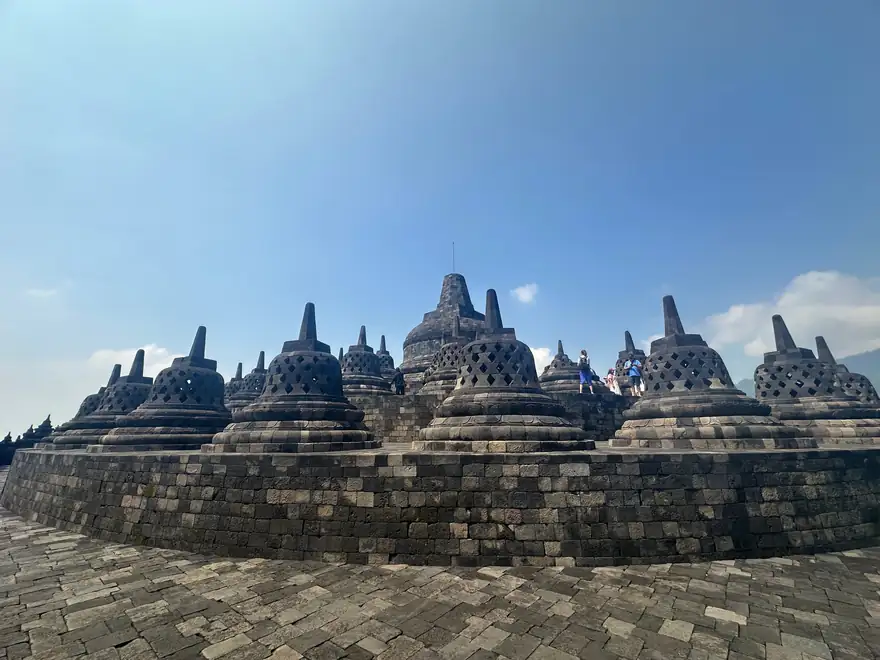
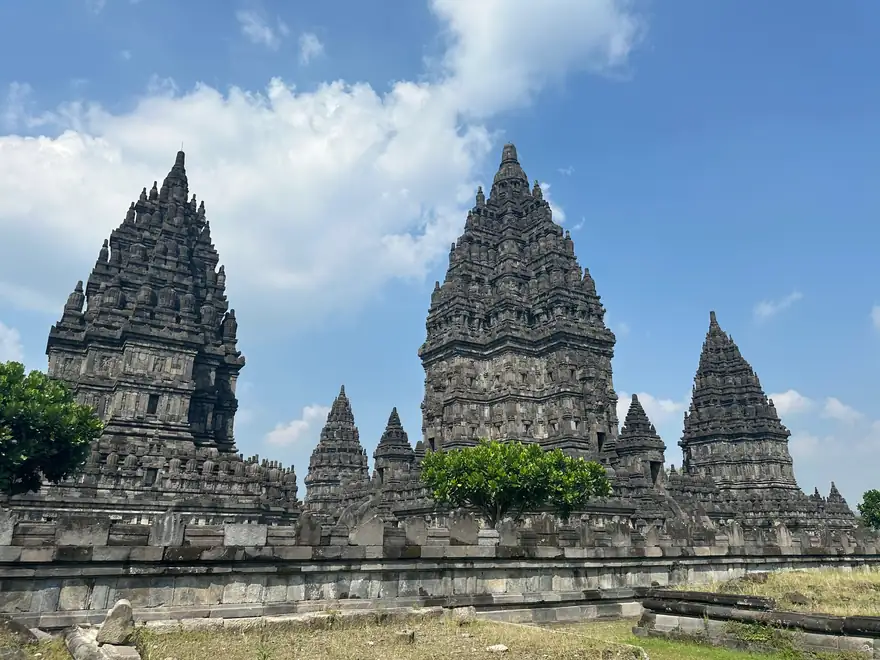
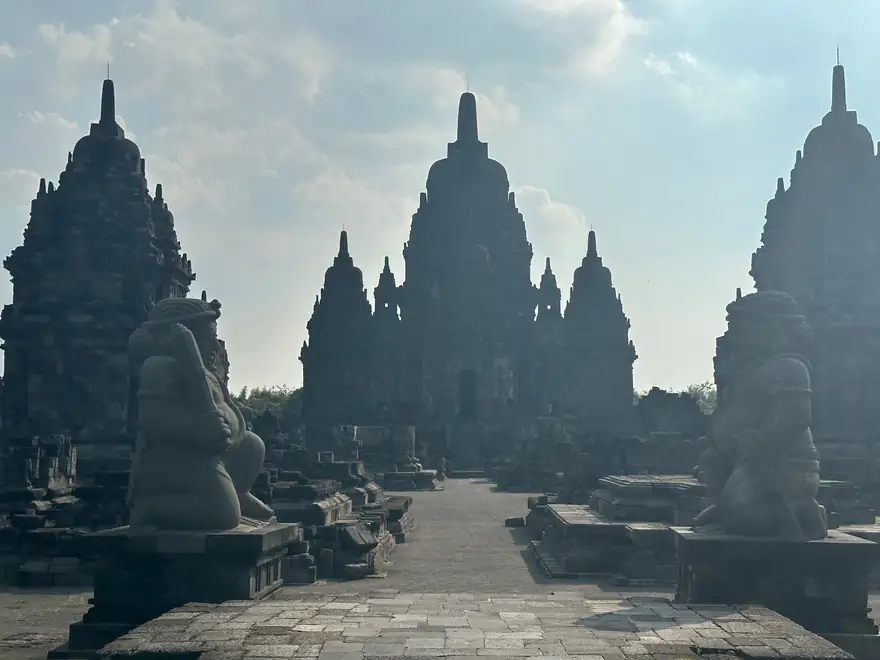
Java is the demographic centre of Indonesia: 154 million people on an island the size of Greece, the densest large island on earth. Yogyakarta, in the south-centre, is the cultural capital — sultanate-era kraton, Javanese batik workshops, a university town with the country's best food markets. Borobudur, the ninth-century Buddhist temple, sits forty minutes northwest, the largest such monument in the world.
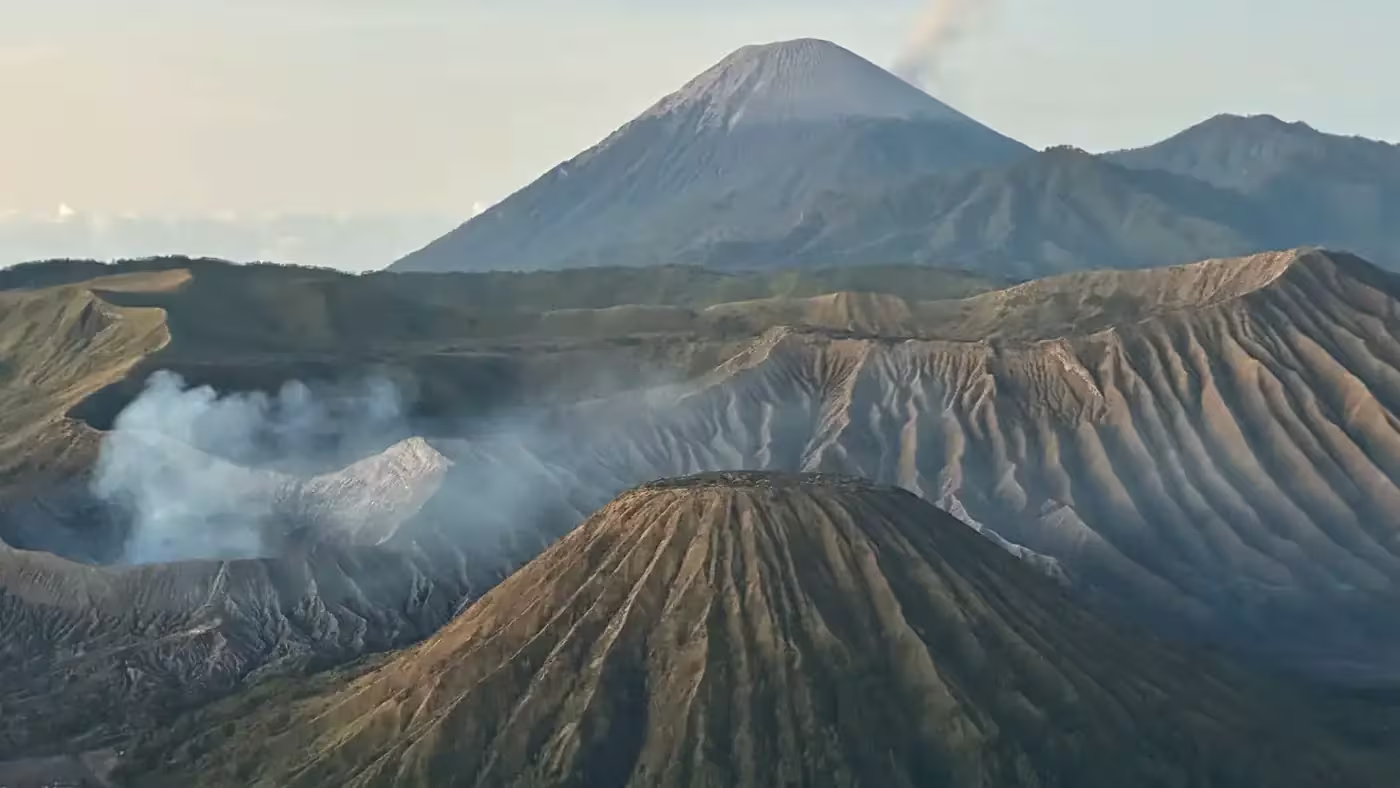
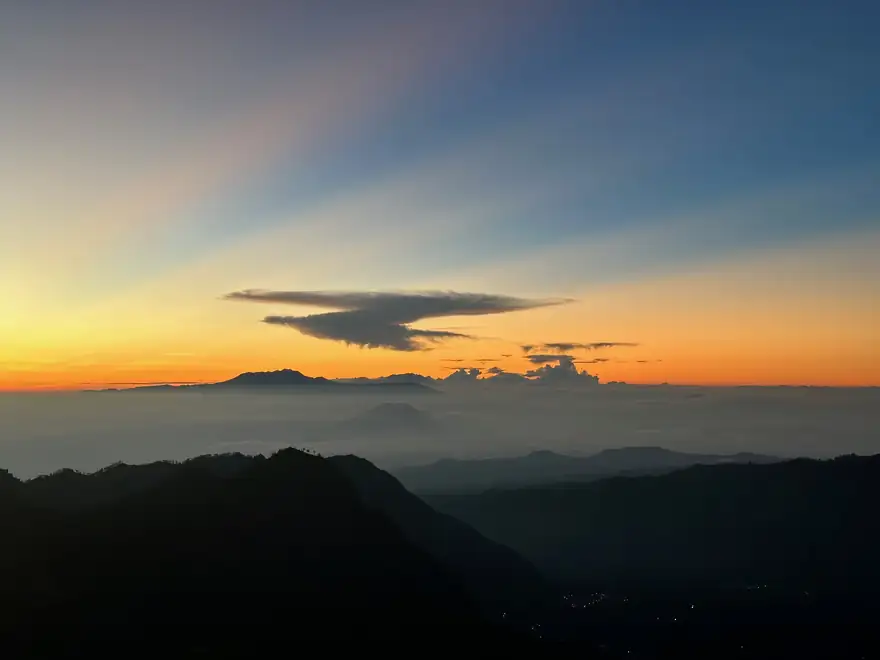
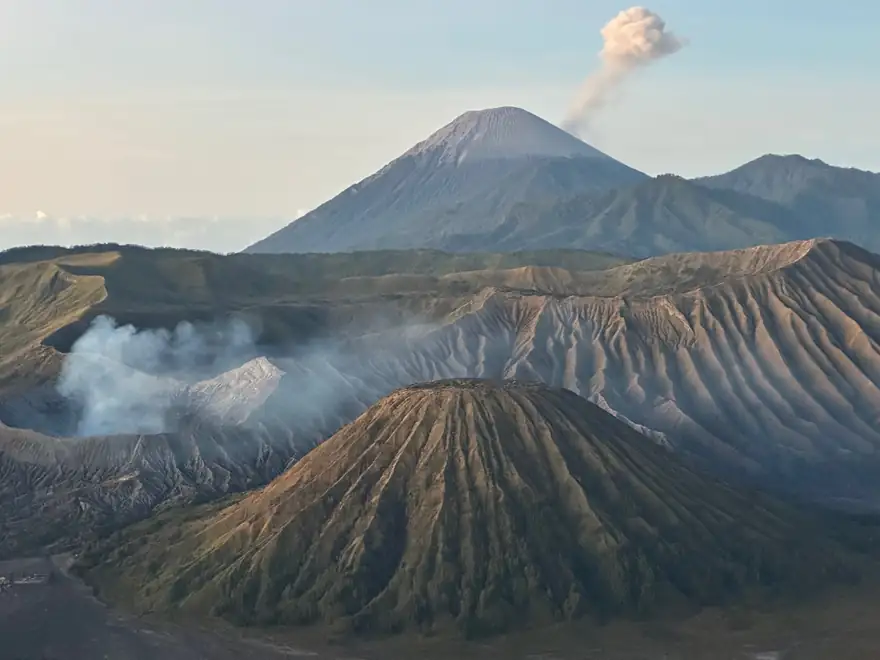
Beyond the cities, Java is its volcanoes. Mount Bromo, in the east, is reached by jeep across a sand sea at 4 a.m. for the sunrise that has launched a thousand Instagram accounts. Ijen, further east, has a sulphur mine inside an active crater and electric-blue flames at night. Both are doable; both reward operator-led logistics over solo attempts.
Most foreign travellers do Yogyakarta + Borobudur in three days and skip everything else. The Java circuit — Yogyakarta, Solo, Bromo, Ijen, ferry to Bali — is one of the great overland weeks in Southeast Asia, and it's almost entirely empty of foreigners between volcanoes.

Sumatra · Lake Toba, the largest crater on earth
Indonesia · Sumatra
Lake Toba and the Orangutans of the North
Lake Toba isn't a lake. It's a 100-kilometre caldera filled with water, the result of the largest volcanic eruption in two million years — an eruption so violent it triggered a global volcanic winter that almost wiped out the human species. There's a Batak village on Samosir Island in the centre. The boat from Parapat takes 90 minutes. The Bataks have their own architecture, their own language, their own Christian-but-also-not religion.
North Sumatra also holds Bukit Lawang, one of the only places on earth where you can walk into the rainforest and see semi-wild Sumatran orangutans. They are habituated, not tame — the difference matters. The walks are run by guides who were poachers two generations ago and now make a better living by keeping the apes alive.
The Mentawai Islands, off Sumatra's west coast, are some of the best surf in the world. The waves are bigger and emptier than Bali. The boats are the same week-long charters you'd take in Indonesia thirty years ago. Surf travellers know. Almost no one else does.
Indonesia · Sulawesi
The Funerals That Last for Days
Tana Toraja's funeral architecture predates the colonial encounter. The houses are shaped like boats. The tombs are carved into limestone cliffs. The funerals are days long — buffalo sacrifice, multi-village processions, family members travelling home from across Indonesia to attend. Tourists are tolerated, not catered to. You go because you've heard about it from someone who went, not because anyone invited you.
North Sulawesi is a different country. Manado is the gateway to Bunaken Marine Park, one of the best dive sites in Asia — coral walls dropping 1,500 metres into water clear enough to read by. The Wakatobi archipelago, further south, is more remote and more expensive, with house reefs from your bungalow.
Sulawesi's shape — four long peninsulas radiating from a centre — means most travel here is by air or boat. The drive between Tana Toraja and Manado is two days through mountain roads. Most travellers fly. The operators who specialise in Sulawesi are the difference between a productive trip and a confused one.
Komodo & Flores · the dragons and the boats
Indonesia · Komodo & Flores
The Dragons and the Boats
Komodo dragons exist on five islands and nowhere else. They grow to three metres and weigh up to 70 kilos. The bite is septic — the prey dies from infection days later. They've been on those islands for four million years. Visiting them requires a licensed ranger, a reasonable fitness level, and the understanding that they are not zoo animals.
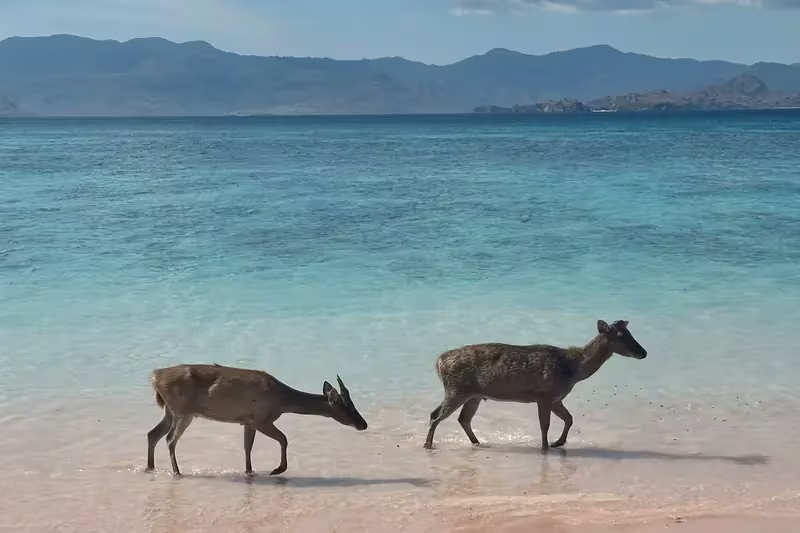
Most people do Komodo as a four-night liveaboard from Labuan Bajo, Flores. The boats range from converted phinisis (traditional wooden schooners) to plastic catamarans. The good ones move you between Komodo, Rinca, Padar (the famous viewpoint), Pink Beach, and Manta Point. The bad ones cram in too many stops and don't anchor anywhere overnight.
Flores itself, the big island east of Komodo, has Kelimutu — three crater lakes that change colour over years. Black, green, red, sometimes turquoise. No one fully understands why the colours shift. Local mythology says the lakes hold the souls of the dead, sorted by virtue. The drive across Flores is one of the most beautiful in Indonesia.
Indonesia · Raja Ampat
The Most Biodiverse Reef on Earth
Raja Ampat — "the four kings" — is an archipelago of 1,500 islands off the western tip of West Papua. The Coral Triangle's epicentre. Marine biologists have logged 75% of all known coral species here, more than anywhere else on the planet. The diving is what divers retire planning to do.
Getting there is the gate. Fly to Sorong on Papua's western tip — most flights connect via Jakarta or Makassar — then a four-hour ferry to Waisai, the gateway town, then a smaller boat to wherever you're staying. There are no walk-up hotels. You book a homestay or a liveaboard months in advance. The infrastructure is deliberately minimal.
The non-divers come for the karsts. Wayag and Pianemo are clusters of mushroom-shaped limestone islands rising from turquoise shallow water — the kind of seascape that doesn't quite look real. The viewpoint hike at Pianemo is forty minutes and ends with the photograph that sells most Raja Ampat trips.
Indonesia · Sumba
The Island That Bali Was Forty Years Ago
Sumba sits south of Flores, off most travellers' maps. There's no mass tourism. The island is roughly half-Christian, half-Marapu (the indigenous animist religion), and the megalithic graves in the west are still in use — slabs of carved stone weighing several tonnes, transported across the island by communal effort, marking centuries of family lineage.
The ikat weaving here is a UNESCO-recognised craft tradition. Each pattern carries meaning — clan affiliation, life event, spiritual symbol. The fabrics take months to weave on backstrap looms. The market in Waingapu sells tourist-grade pieces; the village workshops in the interior sell the real ones, if you bring an introduction.
There are wild horses across the island's southern grasslands — descendants of escaped colonial-era stock. The Pasola festival, held annually in February or March, is a ritual battle between mounted teams from rival villages, throwing wooden spears. It's bloody, it's essential to the harvest calendar, and it is not staged for visitors.
Indonesia · Kalimantan
Indonesian Borneo and the Orangutans of Tanjung Puting
Kalimantan is the Indonesian two-thirds of Borneo, the third-largest island on earth. Tanjung Puting National Park, in the south, is the world's most accessible orangutan reserve — a four-day river expedition on a klotok (a slow wooden houseboat) up the Sekonyer River, with rangers leading you to feeding platforms where the apes come at scheduled times.
The boat is the experience. You sleep on the upper deck under mosquito nets. Mealtimes are whatever the cook makes downstairs. The river is brown with tannins, the banks are nipa palm, and proboscis monkeys jump between trees as you pass. The apes are habituated — they remember the rangers who fed them as juveniles — but they are not tame. The same rules apply.
Beyond Tanjung Puting, Kalimantan is mostly closed to casual travel. The interior is logging concessions and Dayak longhouse country, accessible only with serious operator support and weeks of overland time. Indonesia is moving its capital to Nusantara, in East Kalimantan, by 2045. What that means for visitor access is being written in real time.

Lombok & Gili · what's east of Bali
Indonesia · Lombok & Gili
What Lies Just East of Bali
Lombok is what Bali was twenty years ago. Mount Rinjani, the country's second-highest volcano, takes three days to summit and ends with the sunrise over a crater lake the colour of old denim. The trek is the test most Lombok travellers come for. The Sasak culture in the centre and south of the island is distinctly its own — a blend of Islamic, animist, and pre-Hindu — and the weaving villages make some of Indonesia's finest textiles.
The Gili Islands — three small sandbanks off Lombok's northwest coast — are where you go to do nothing. No motor vehicles. No dogs. Snorkelling off the beach. The original backpacker triangle was Gili Trawangan (party), Gili Air (mid), Gili Meno (quiet). The infrastructure has improved; the formula hasn't.
The 2018 earthquake reshaped North Lombok. Many of the resorts that closed have reopened; some haven't. The recovery has been quietly impressive. Travellers who came in 2017 don't recognise the road from the airport now.